Backpacks, Buses & Burpees
  • Blog
  • About us
  • Contact

Salt Flats & San Pedro De Atacama

6/1/2014

2 Comments

 
The town of Uyuni is about a six hour bus trip away from Sucre and doesn't have much to offer downtown. As with most travelers, what brought us there was that the town acts as a gateway to the largest salt flats in the world.

Three-day tours from Uyuni, through the salt flats and the Bolivian part of the atacama desert, finishing in Chile, are less than $200 each and are actually the cheapest way to get to Chile from Bolivia. The advantage is that you get to see some spectacular scenery along the way.
We chose one of the most reputable and most expensive companies for our tour. There have been plenty of tourists who have died on cheaper tours because of drunk guides/drivers so we were happy to give them a miss. Even then, as a couple we met in La Paz told us, this is Bolivia and some of the better companies can be dodgy. The altitude of the tour varies between 3600 and 5000 meters, and the girl we met had got quite sick. Her tour operator gave her aspirin without telling her what it was and when she got an allergic reaction he refused to drive her to hospital (despite being told by a doctor that she'd die otherwise) until her husband, together with other kind tourists, produced a $400 cash incentive.

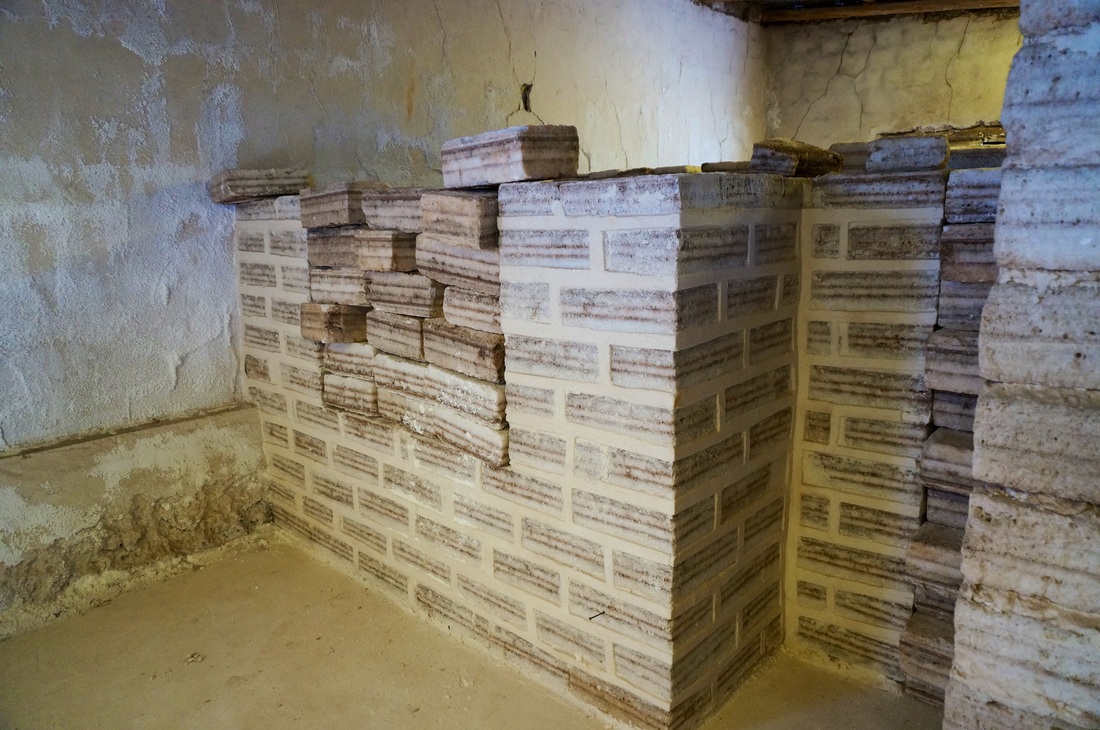
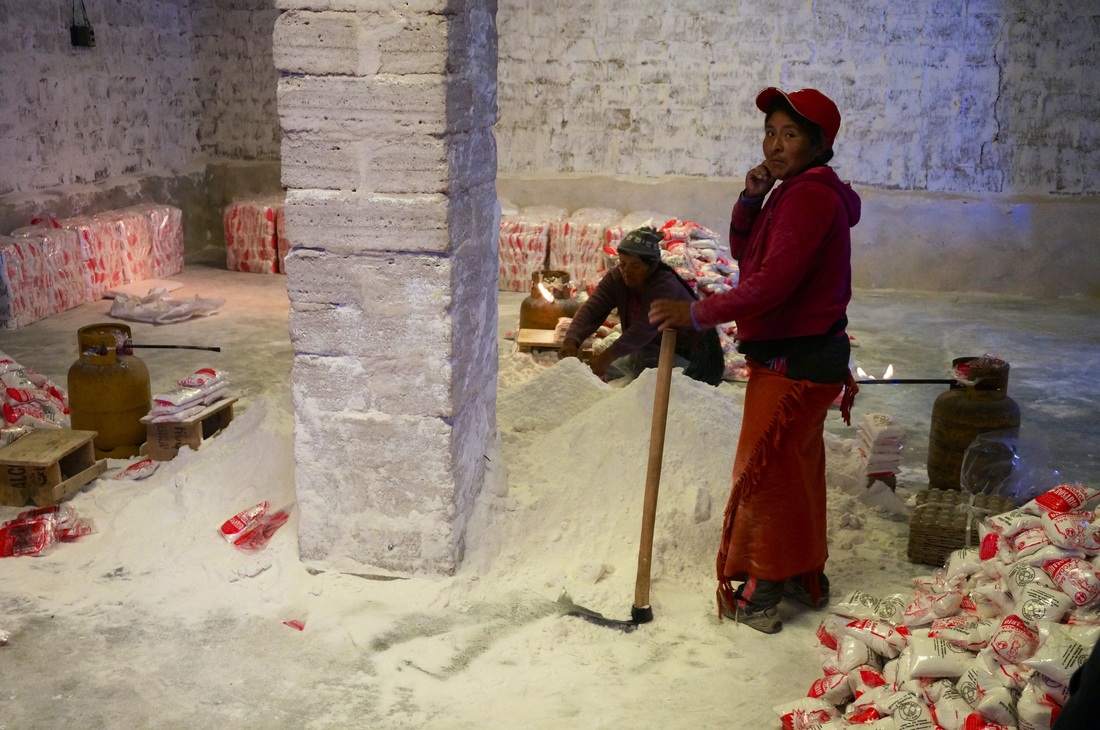
Luckily our tour wasn't that eventful. We started in Uyuni early in the morning before heading to a nearby town where locals took salt from the flats to make salt bricks (for building houses) and table salt. Although no permits are required to extract the salt (apparently they have more than they know what to do with), it's not a particularly lucrative business; large salt bricks are worth 15 cents each and packaging a metric tonne of table salt in one kilo bags earns locals less than 10 dollars.

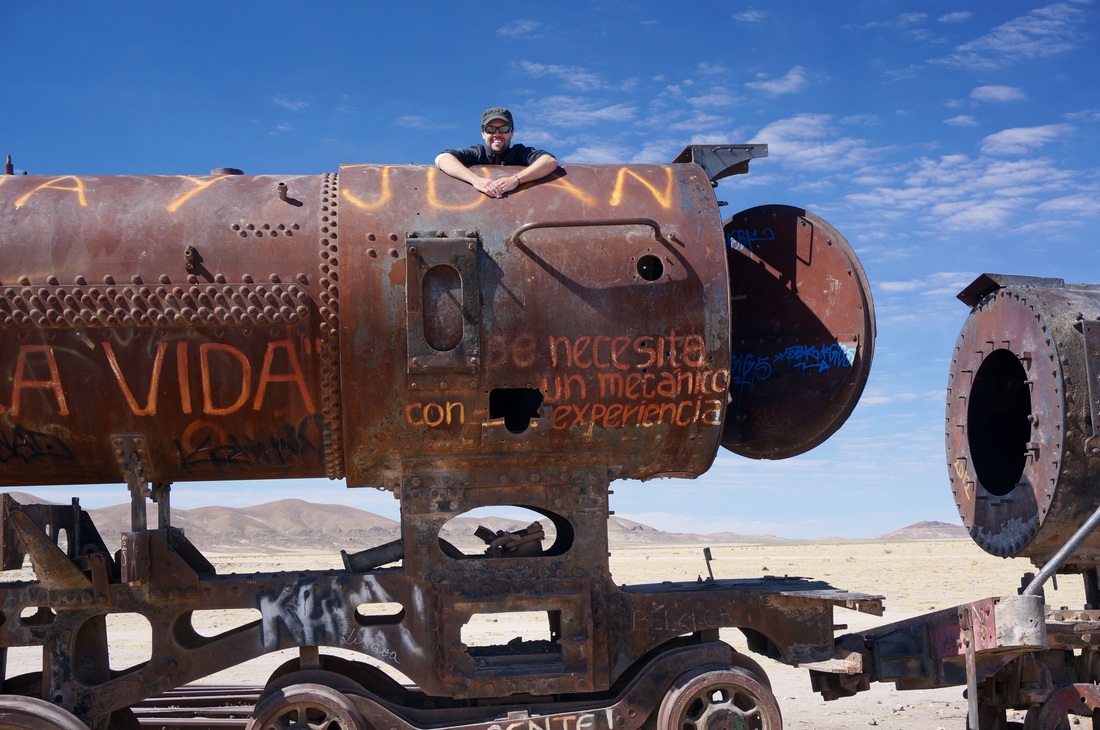
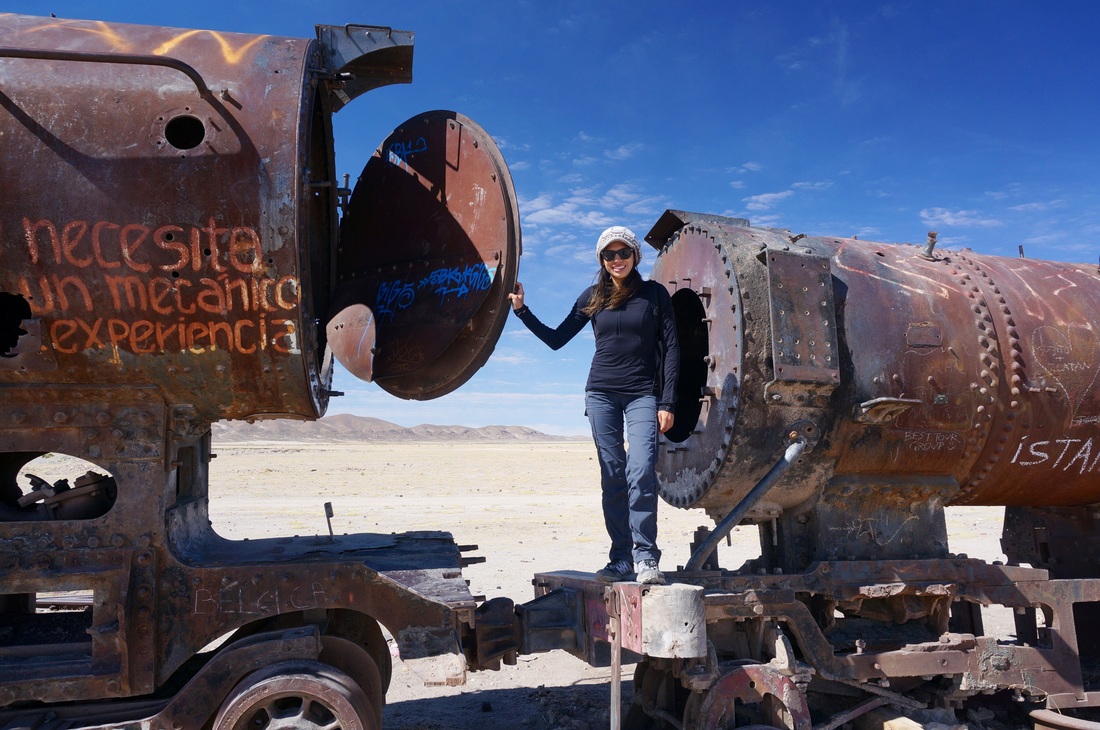
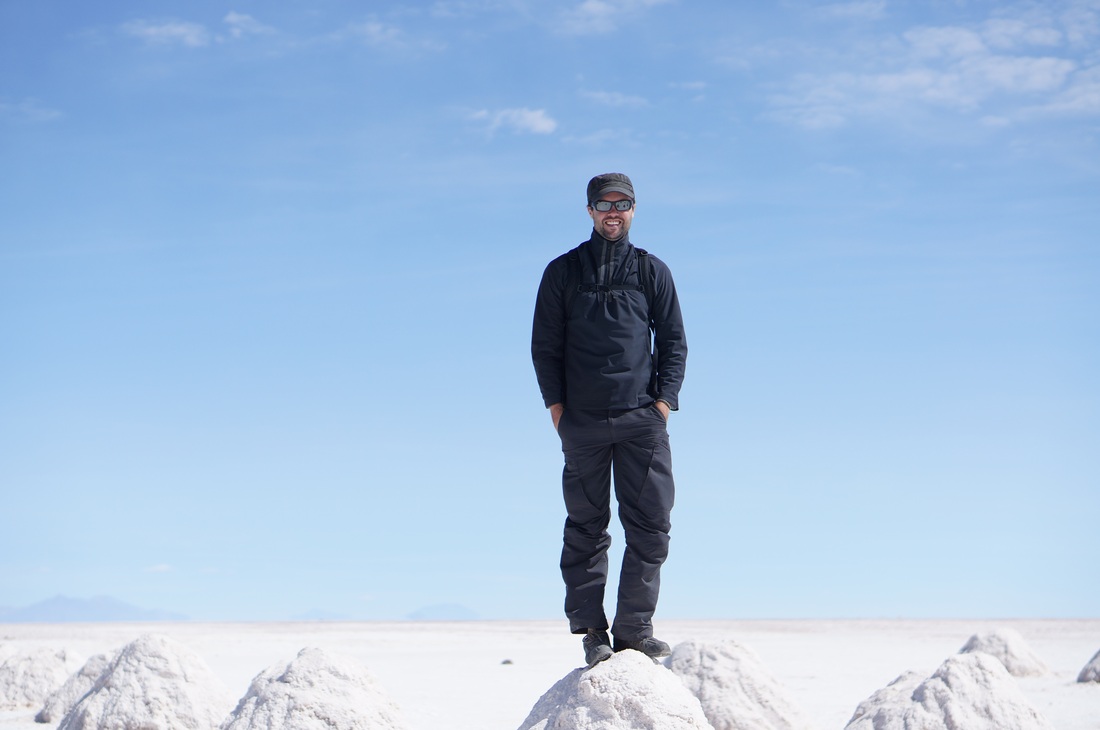
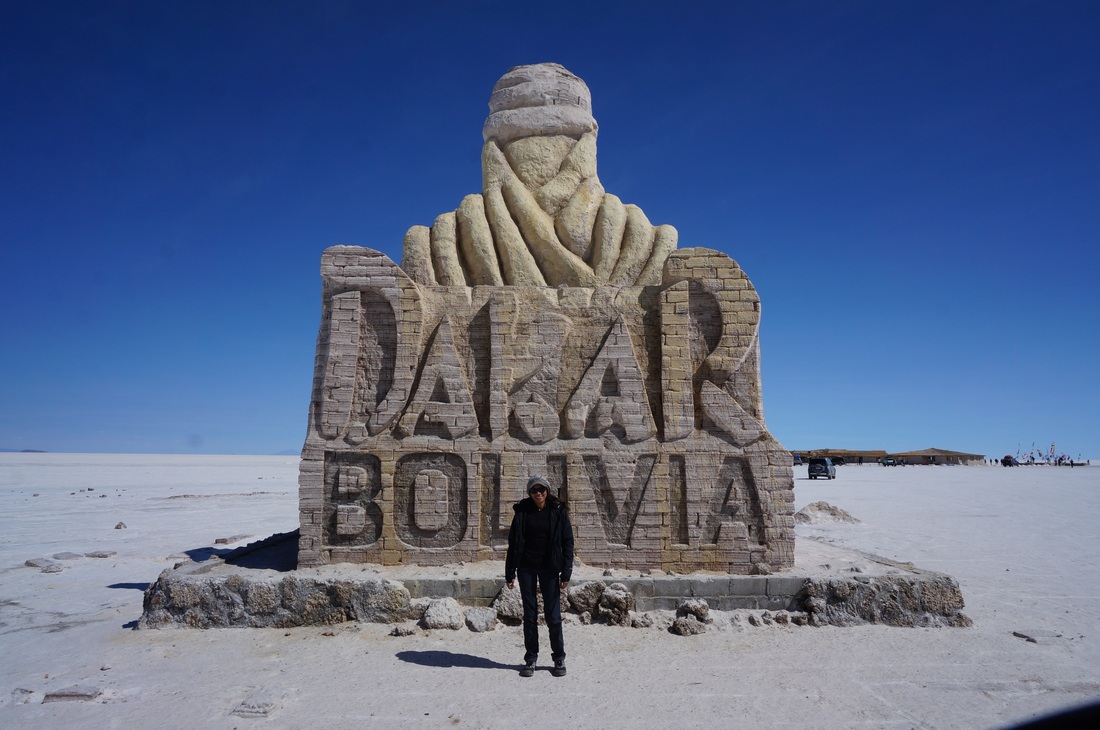
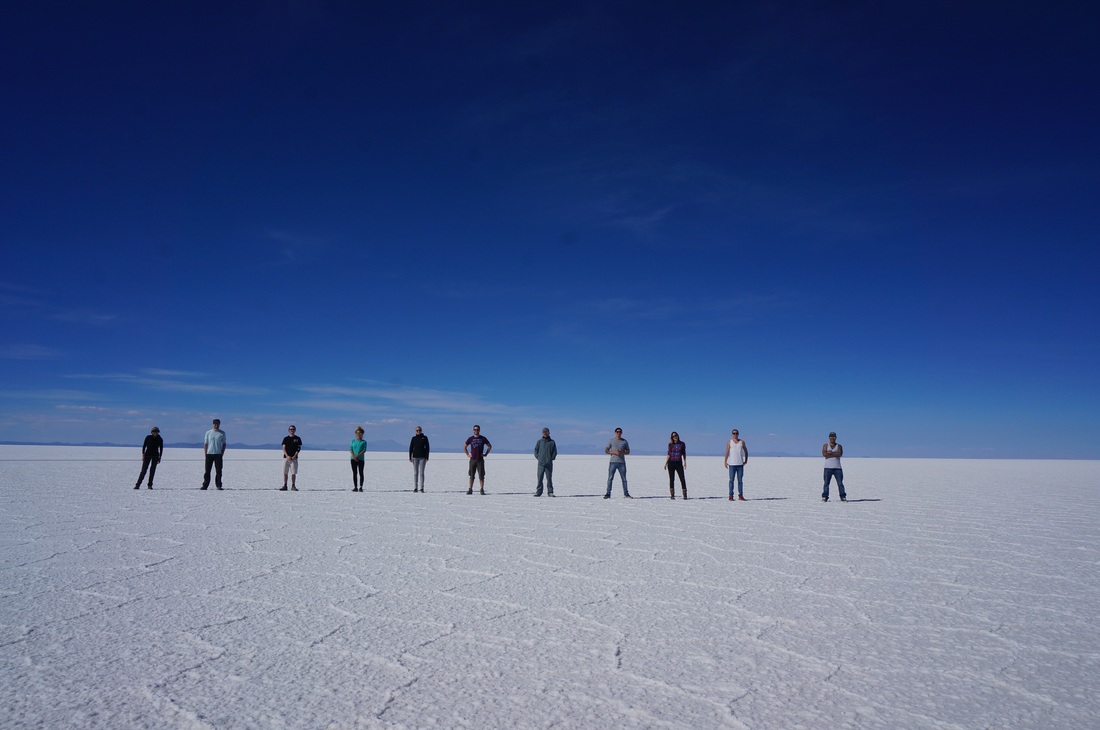
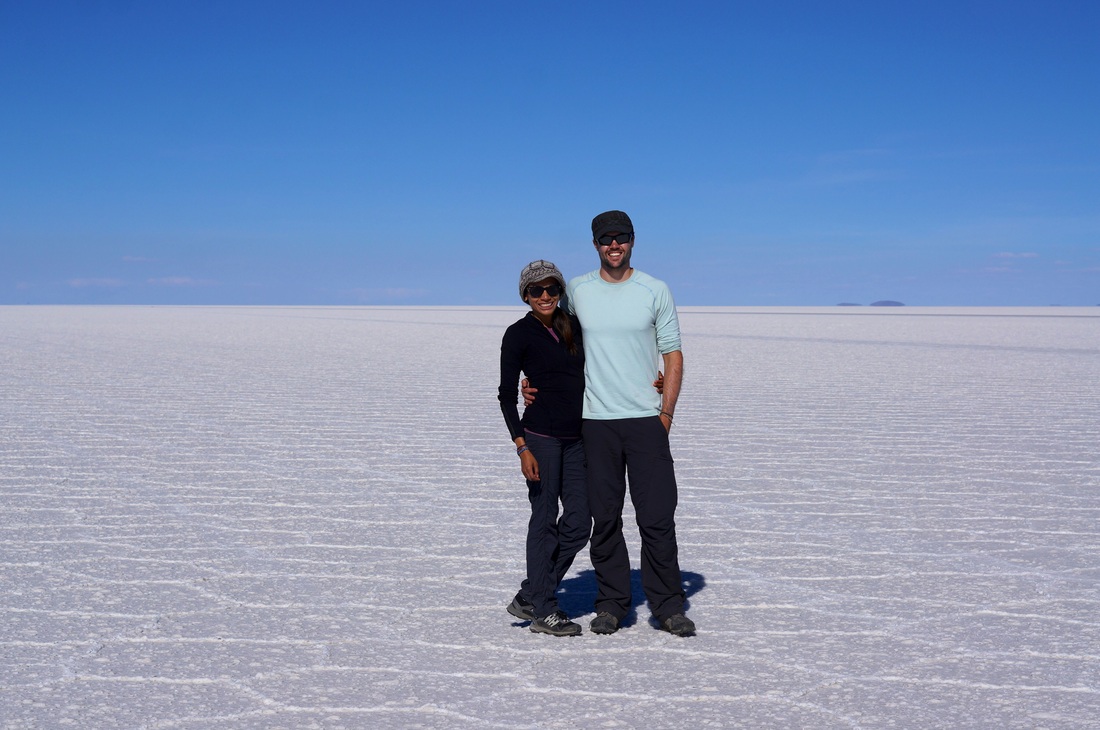
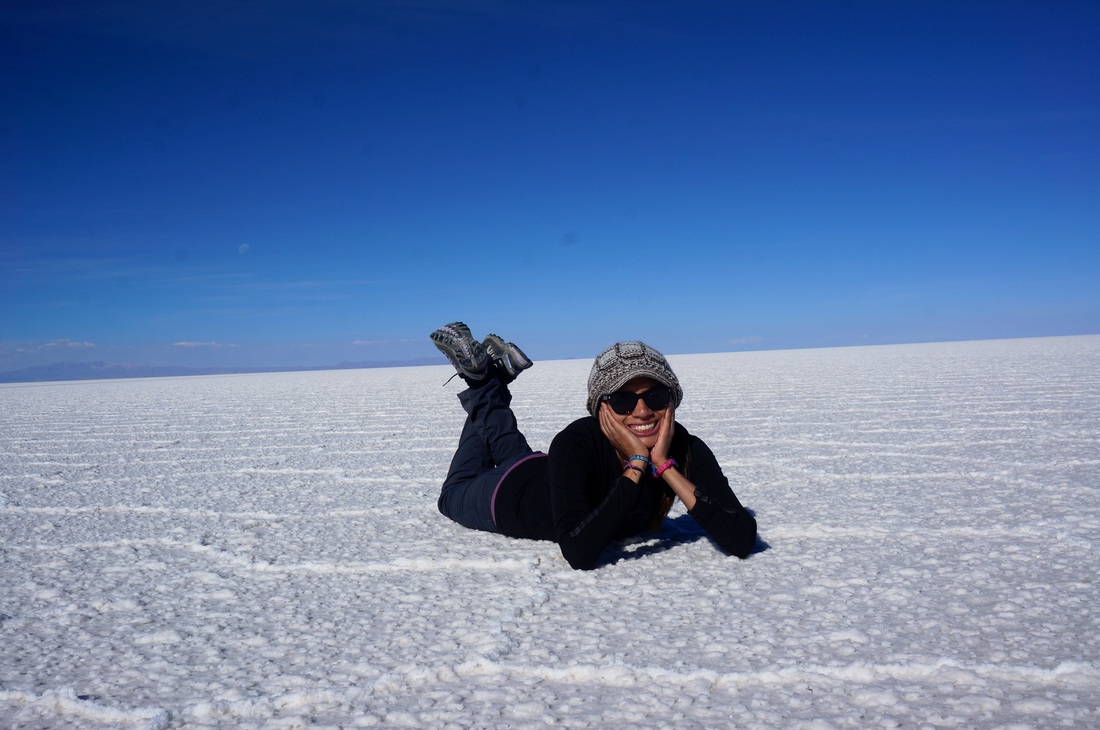
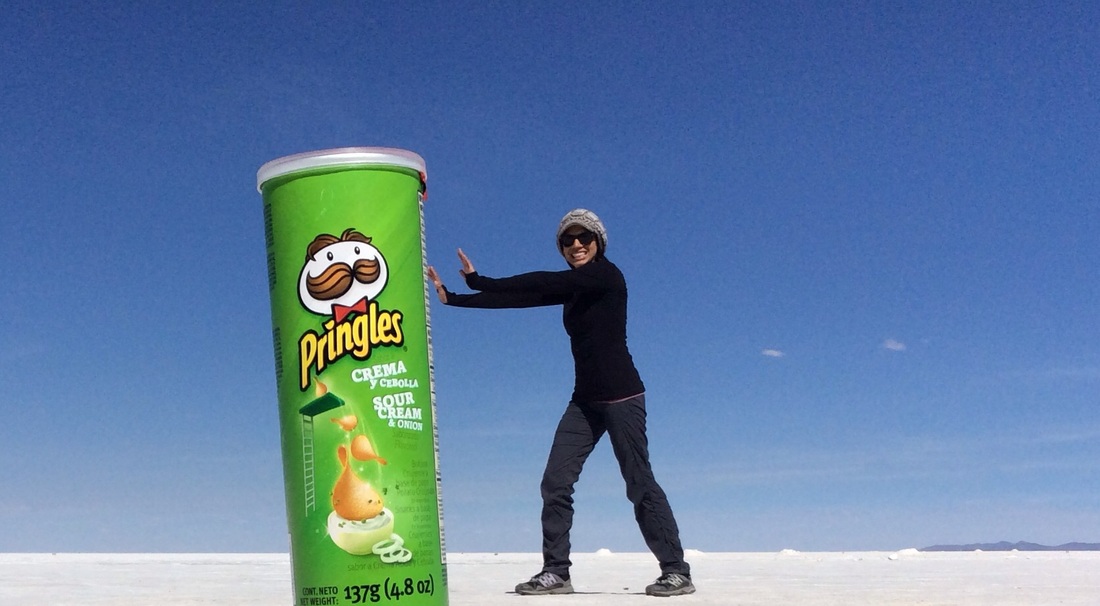
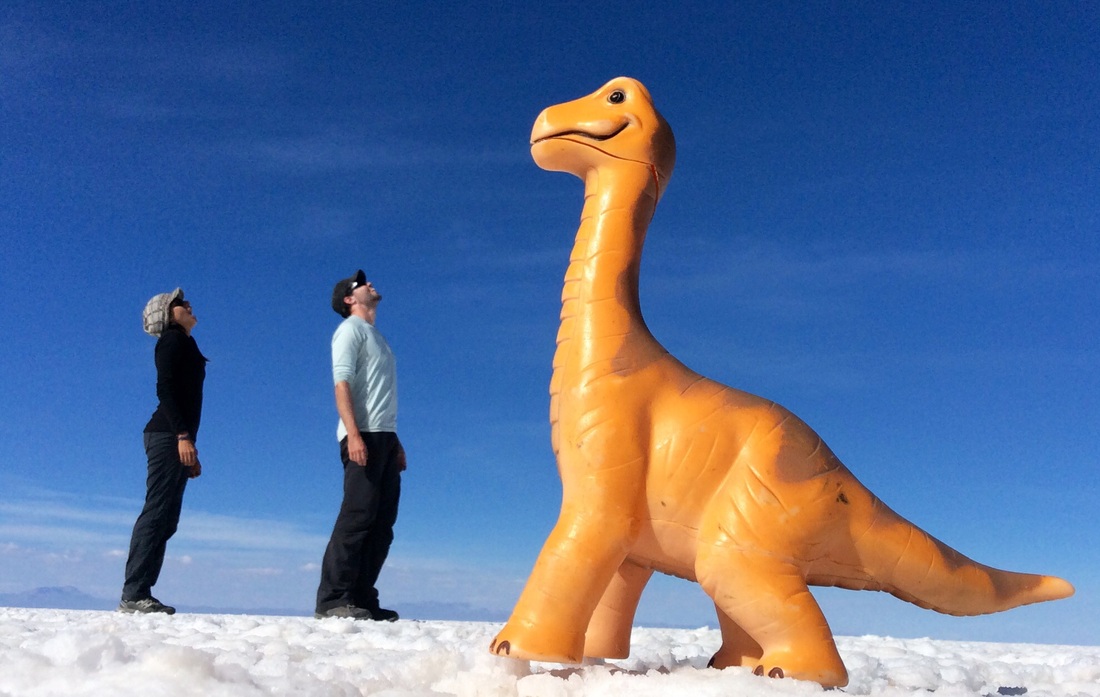
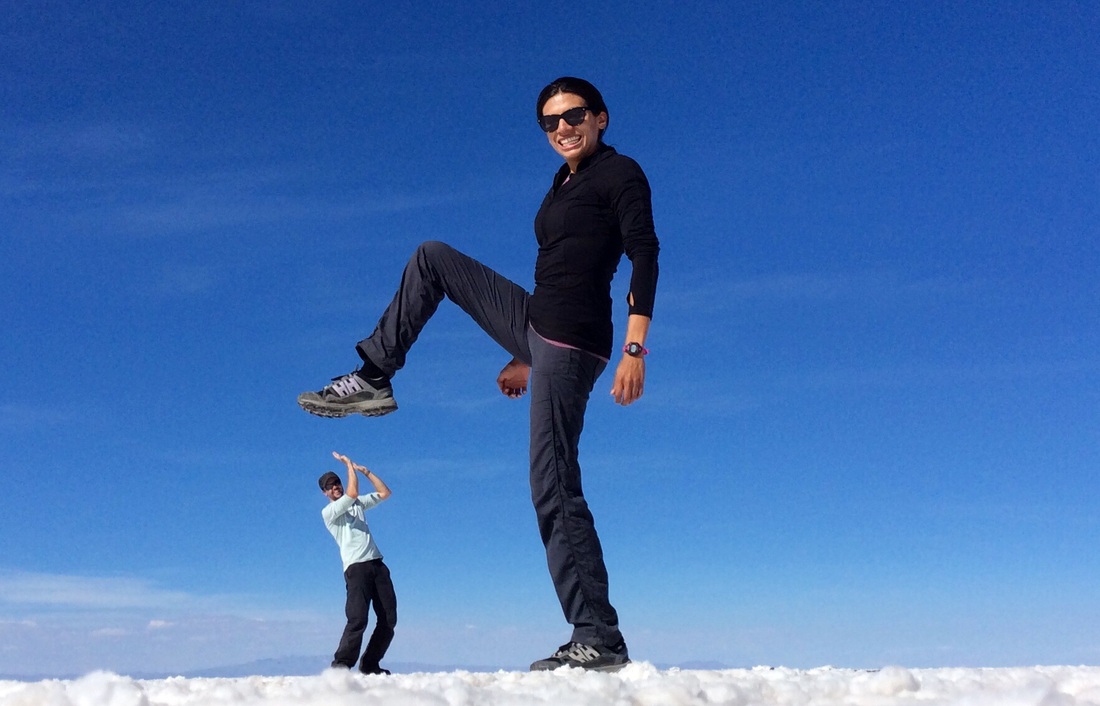
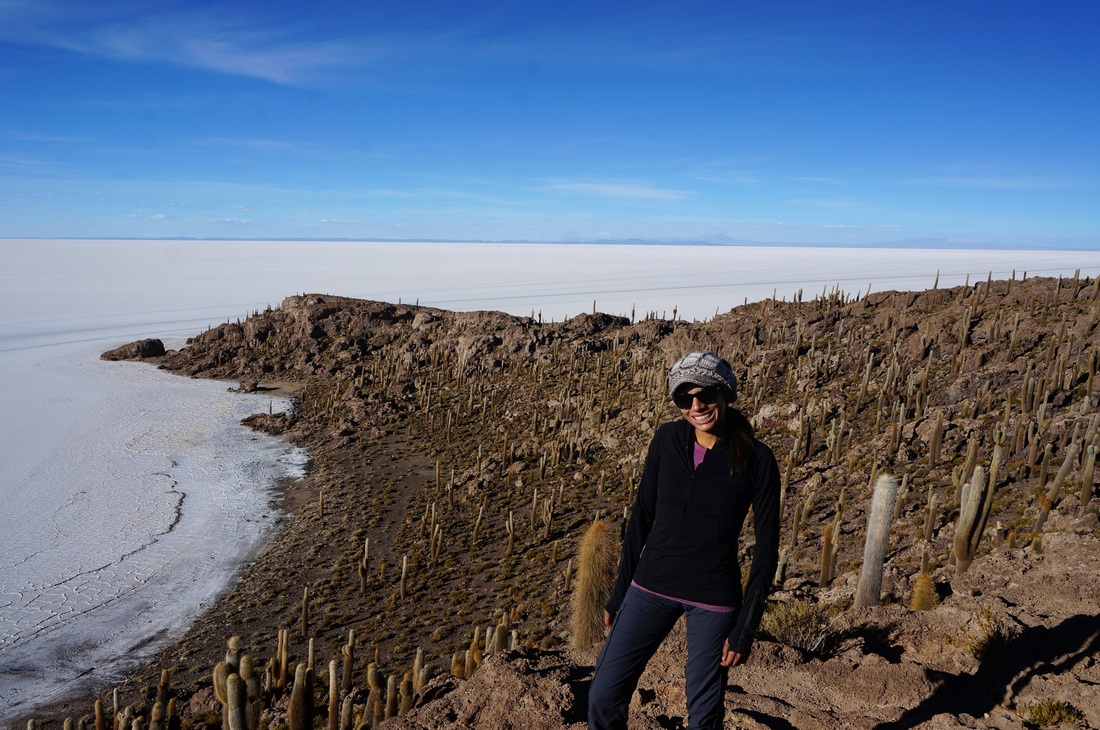
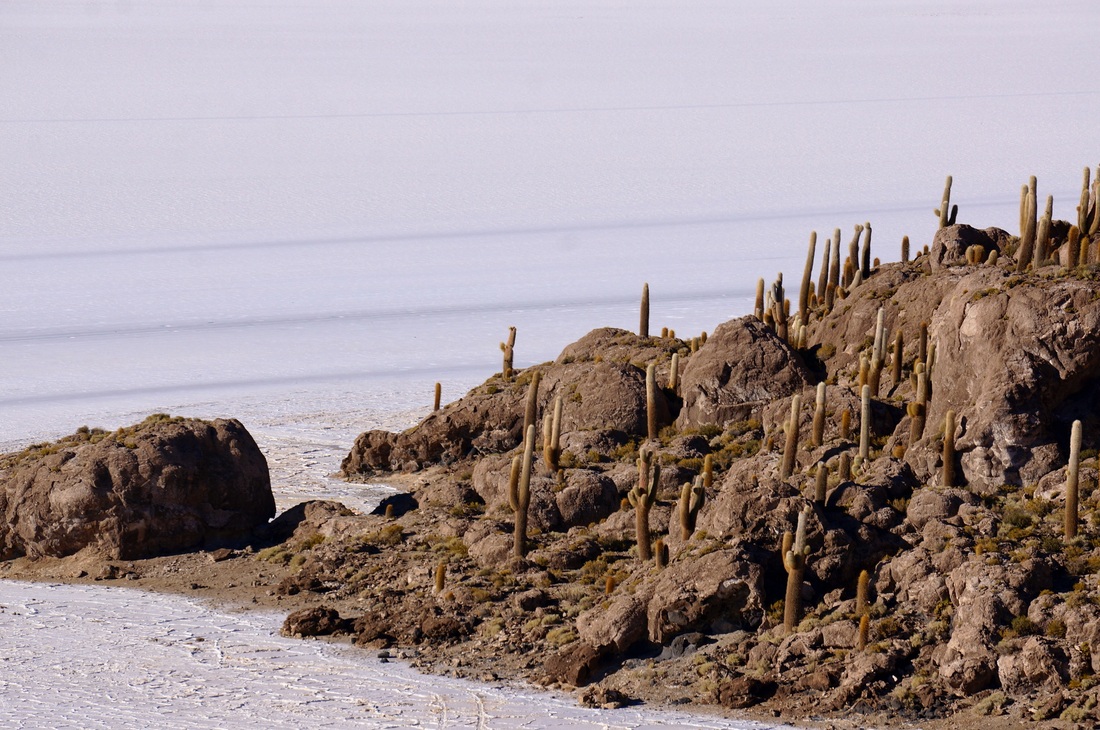
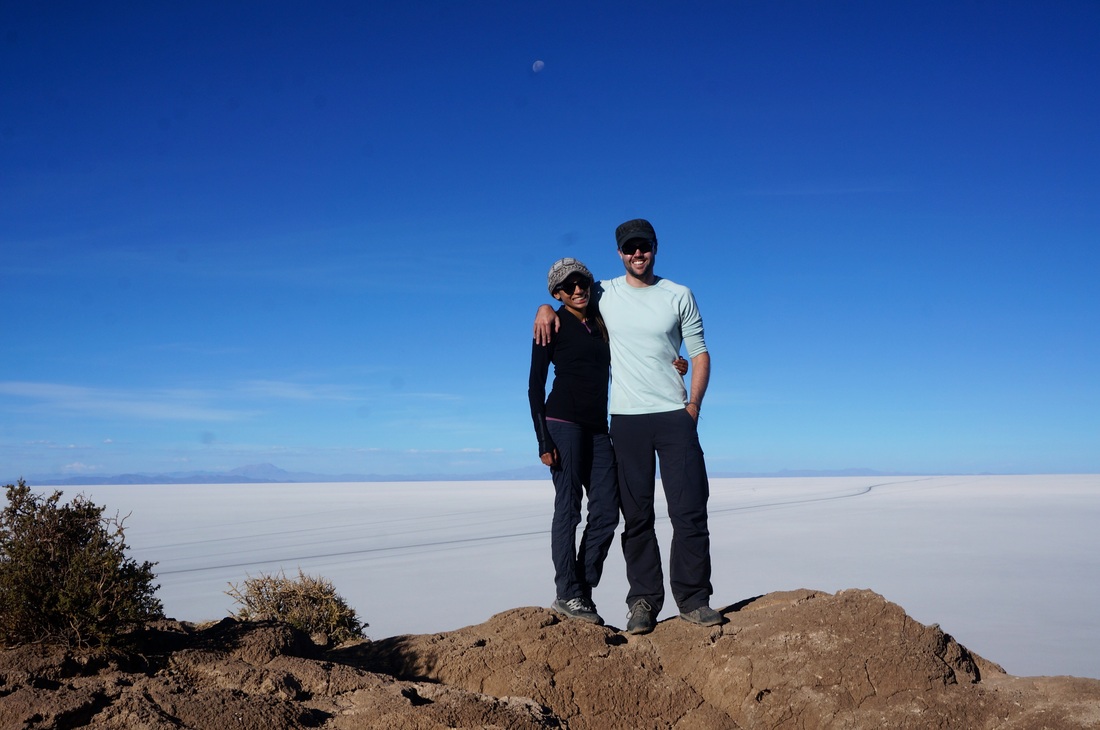
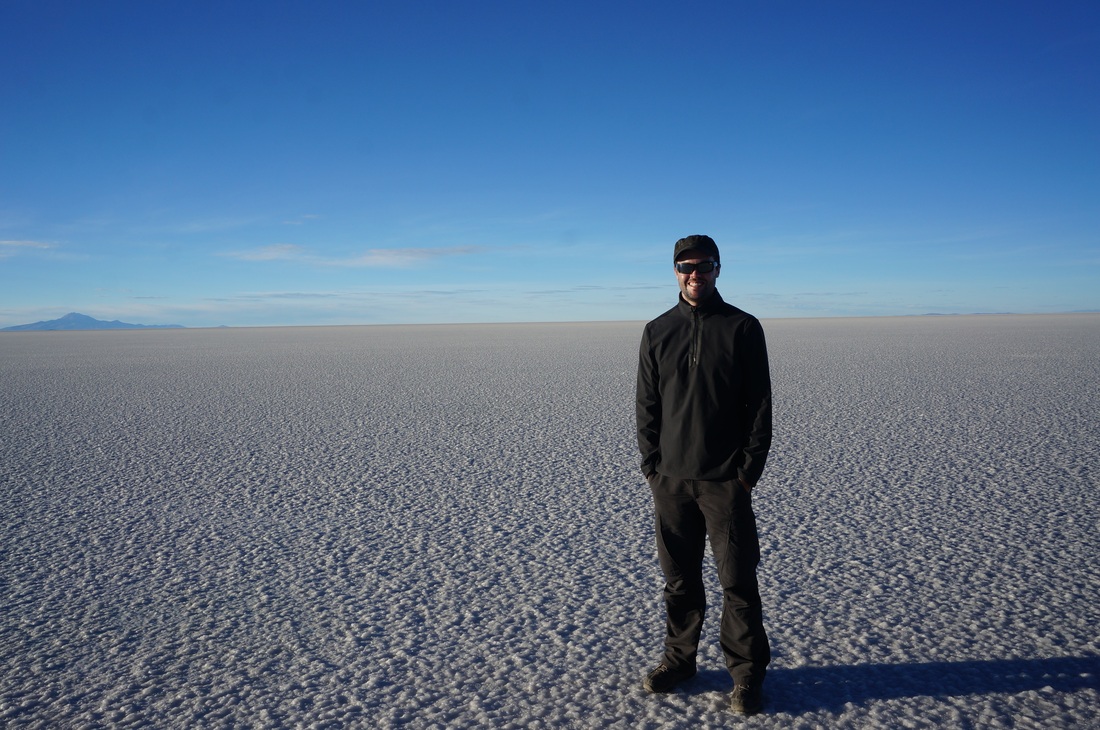
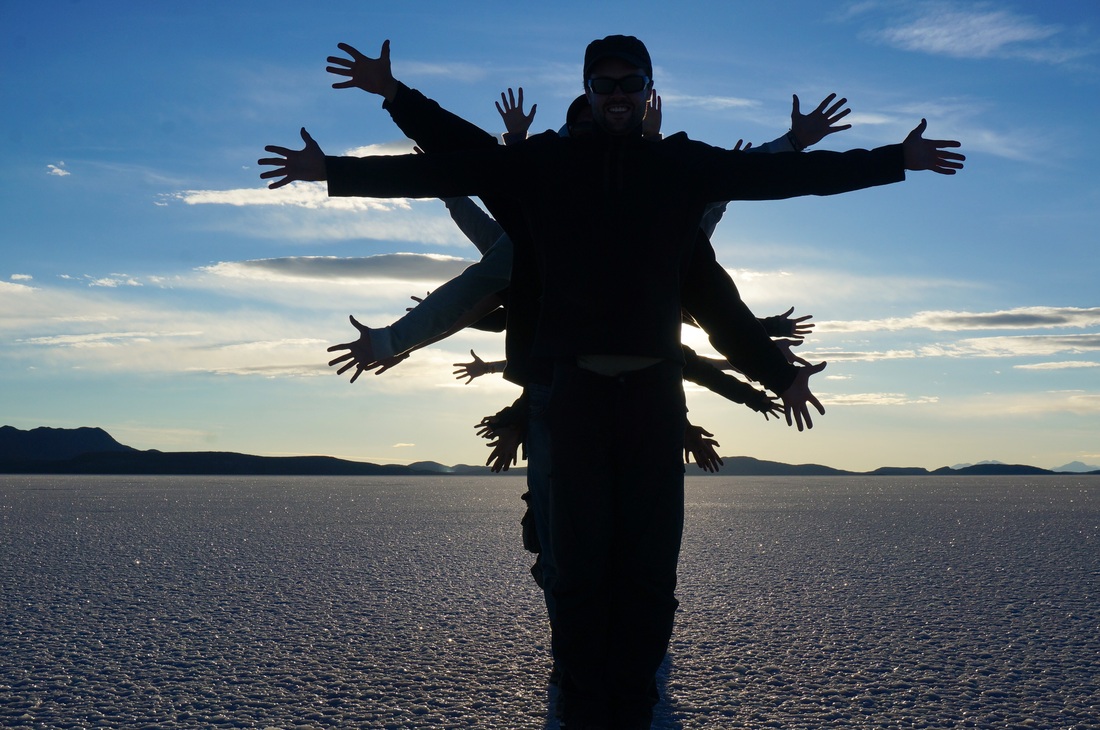
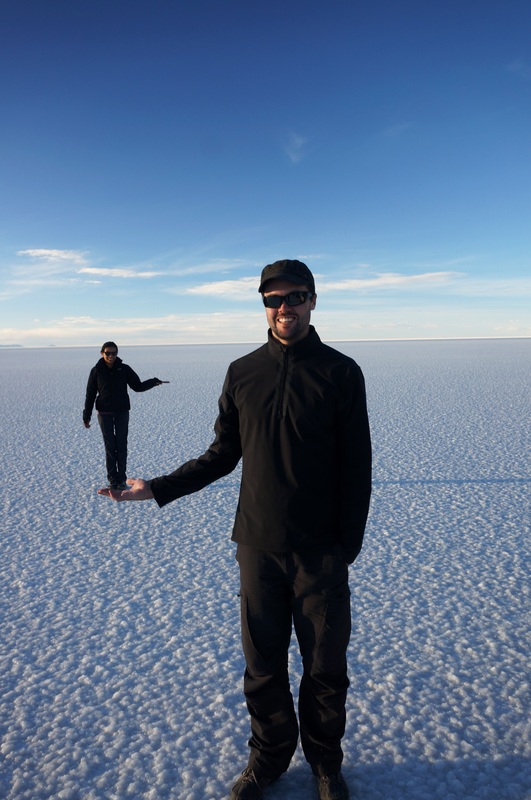
We spent the rest of the first day on the massive salt flats themselves, taking lots of silly perspective shots (Sam thought a few too many) and enjoying a stunning sunset. We were able to get a great view of the scale of the flats from the central Inca Wasy island, a rocky hill full of cactus and petrified coral (a reminder that thousands of years ago, before the water evaporated to leave just huge amounts of salt, this area was part of the ocean). Our first night's accommodation was at a modest hostel here the walls, bed frames, chairs etc were all made out of salt bricks.
Picture
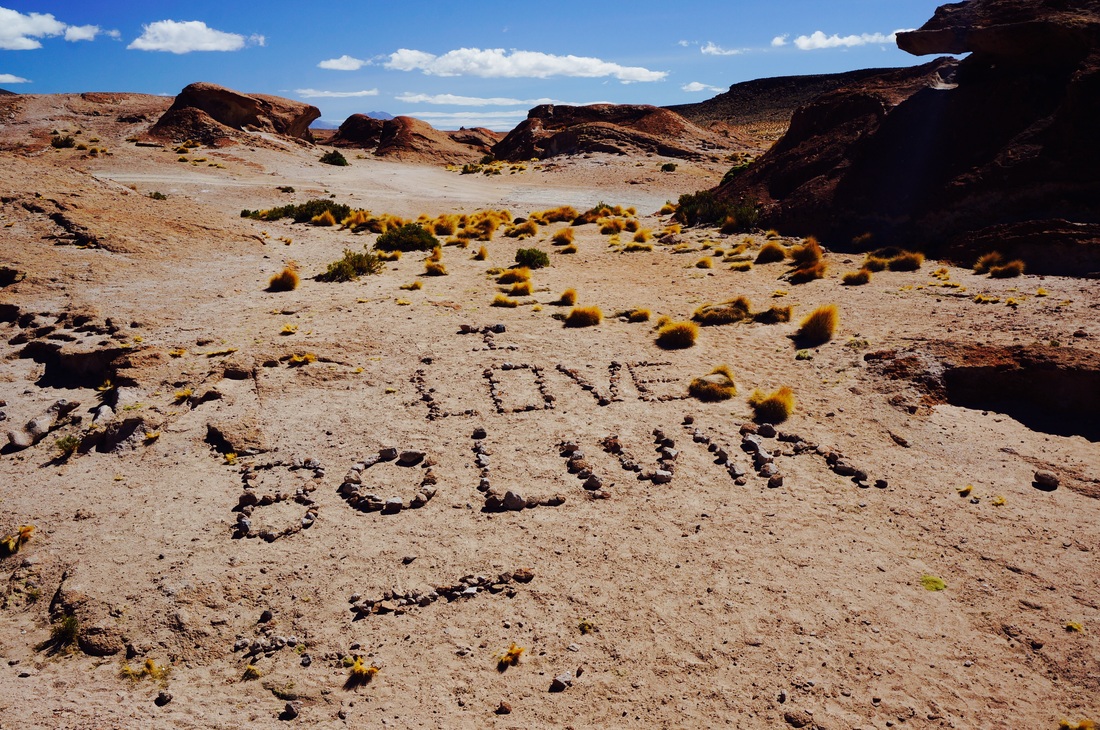
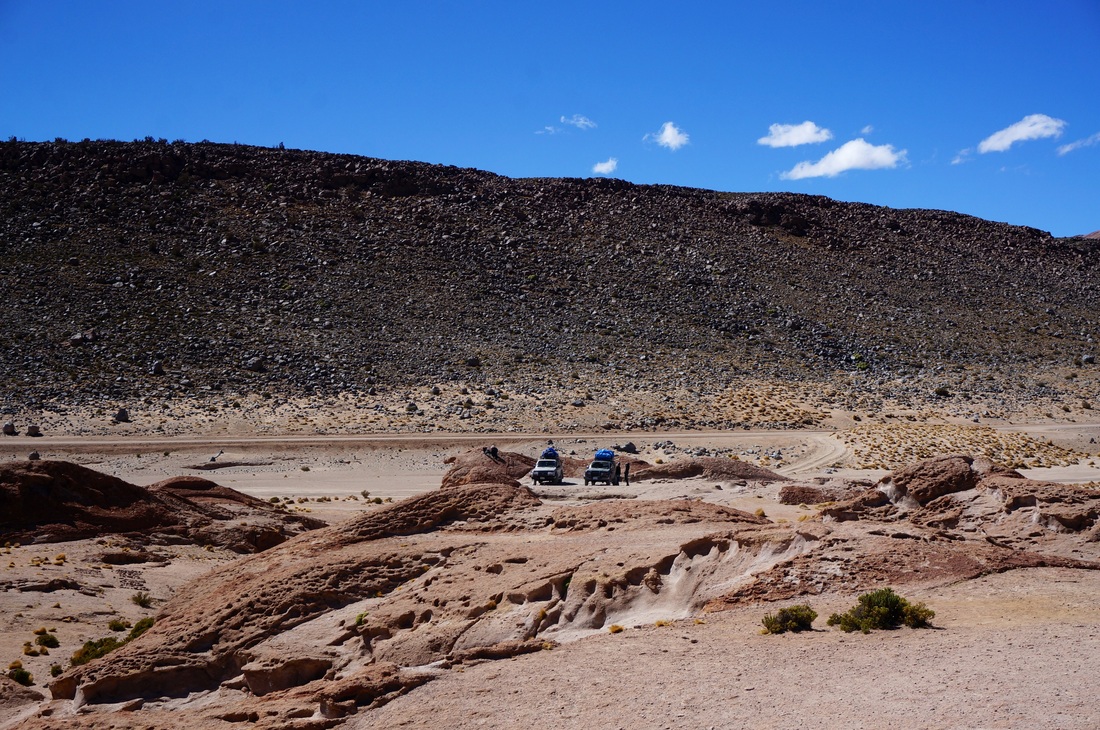
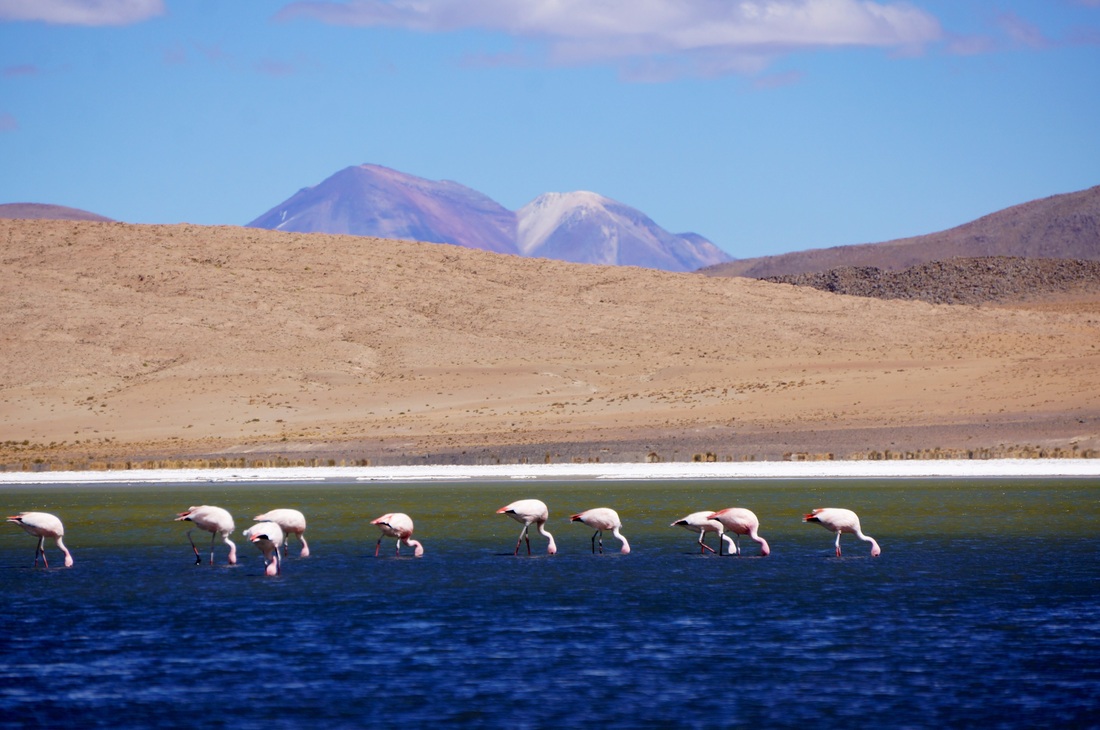
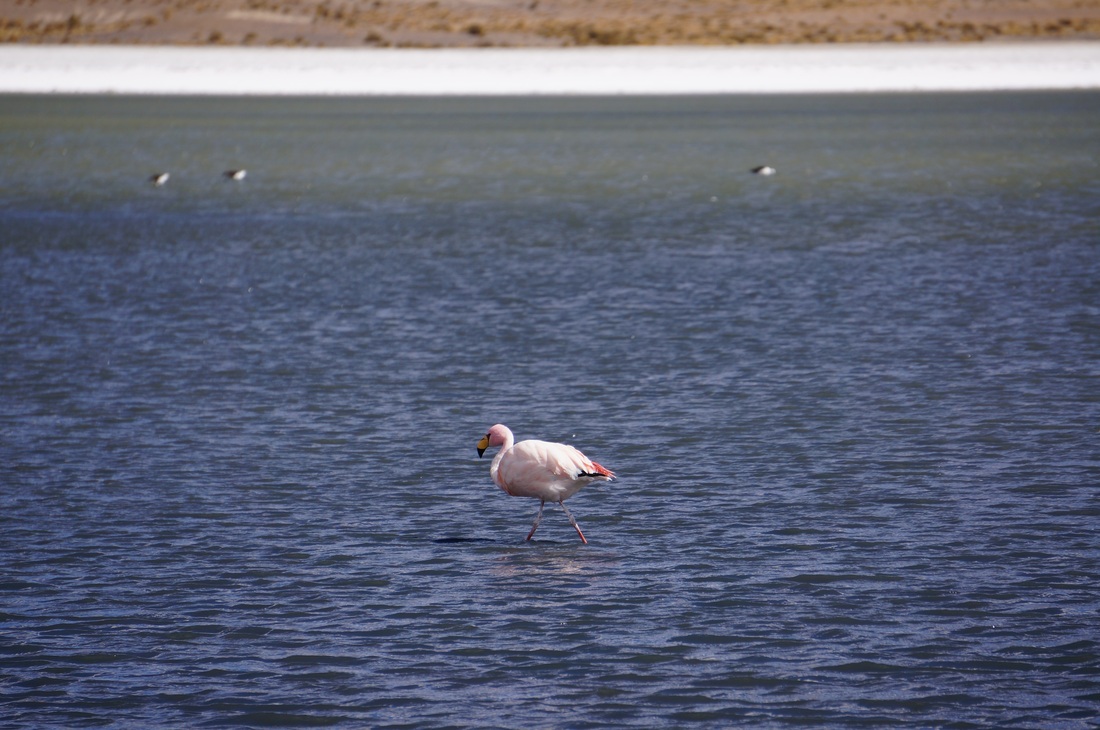
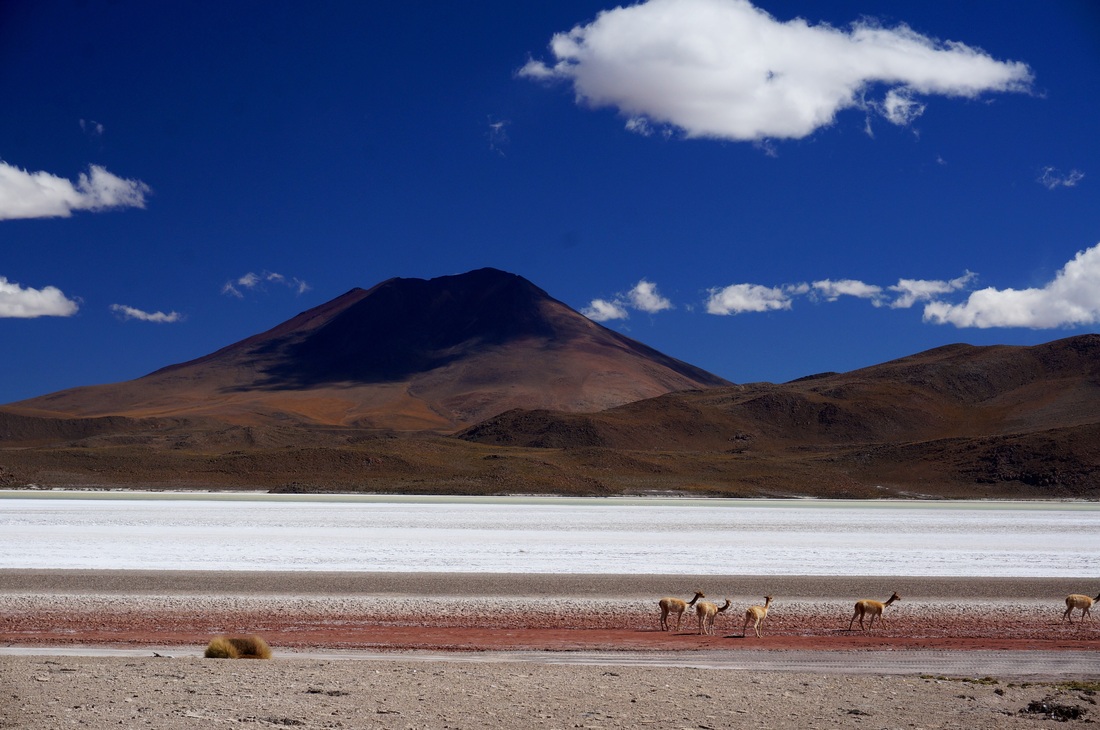
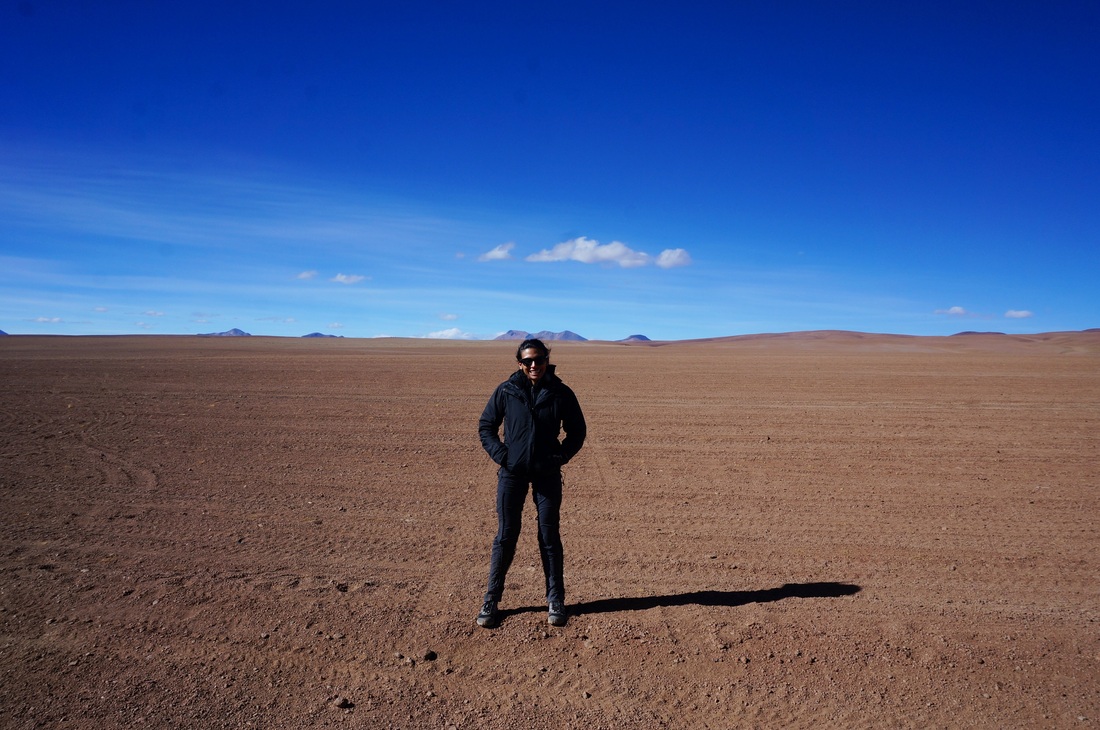
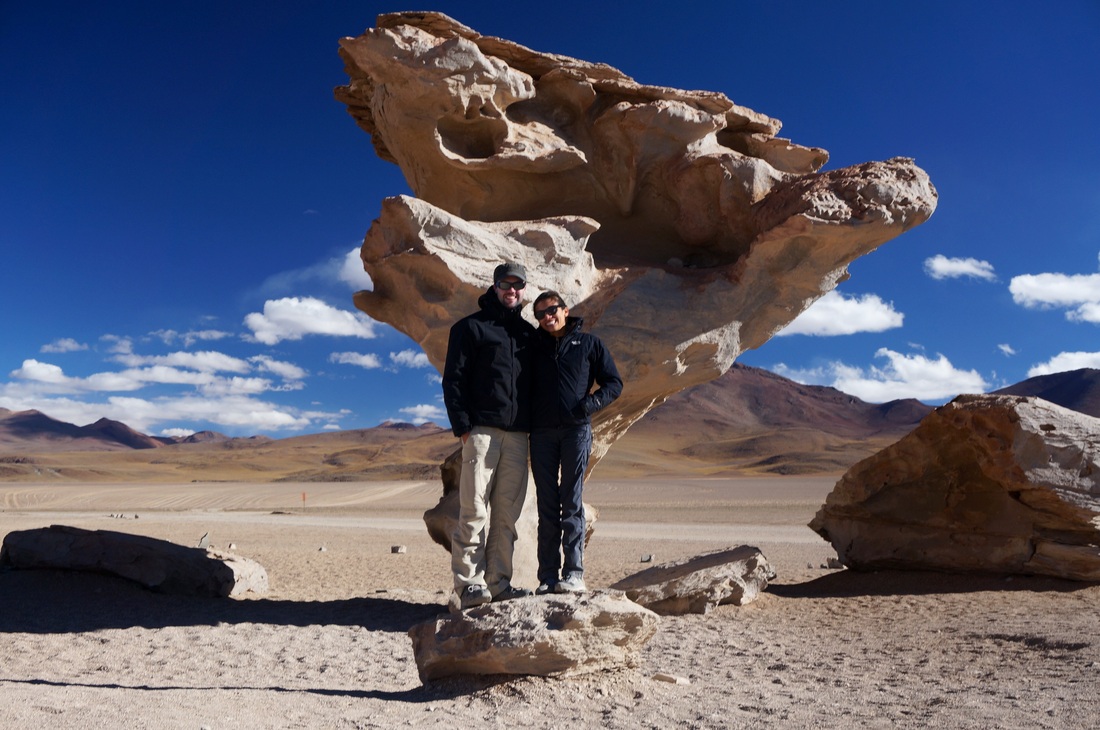
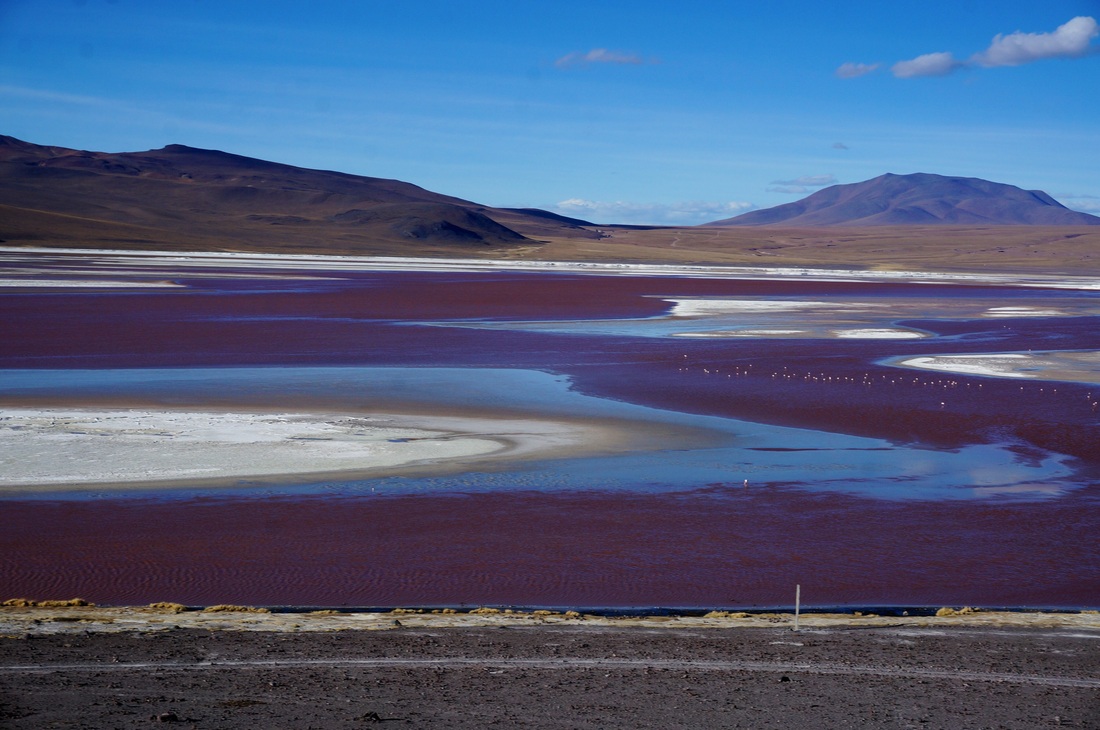
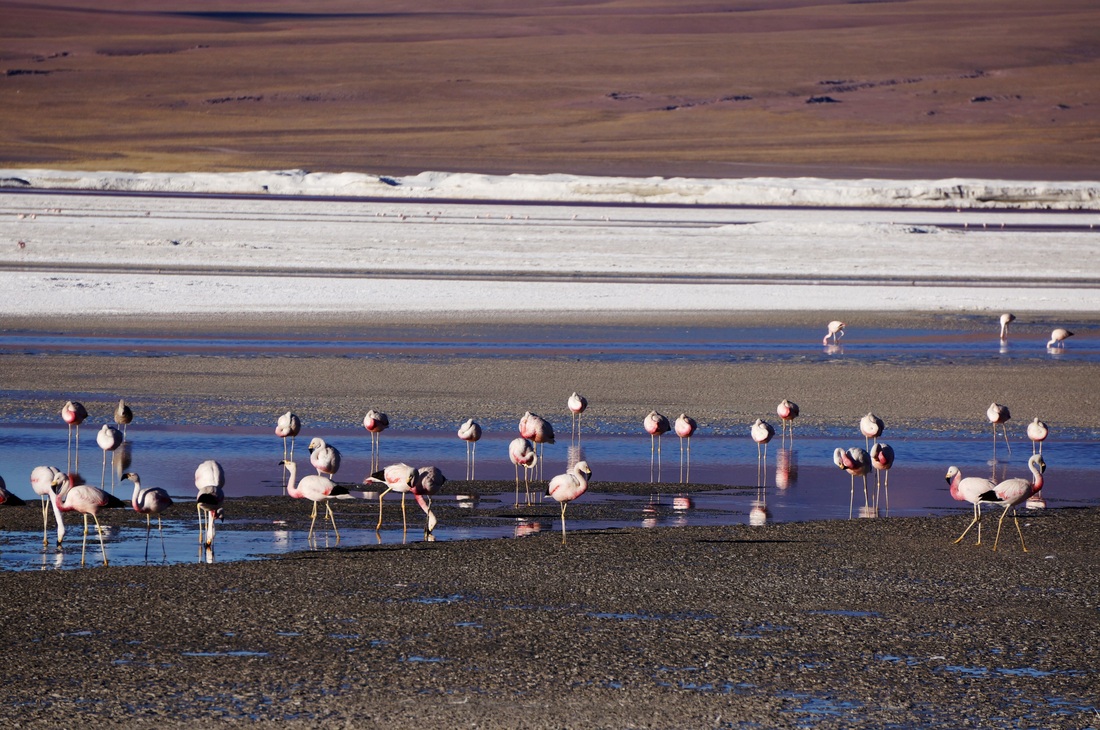
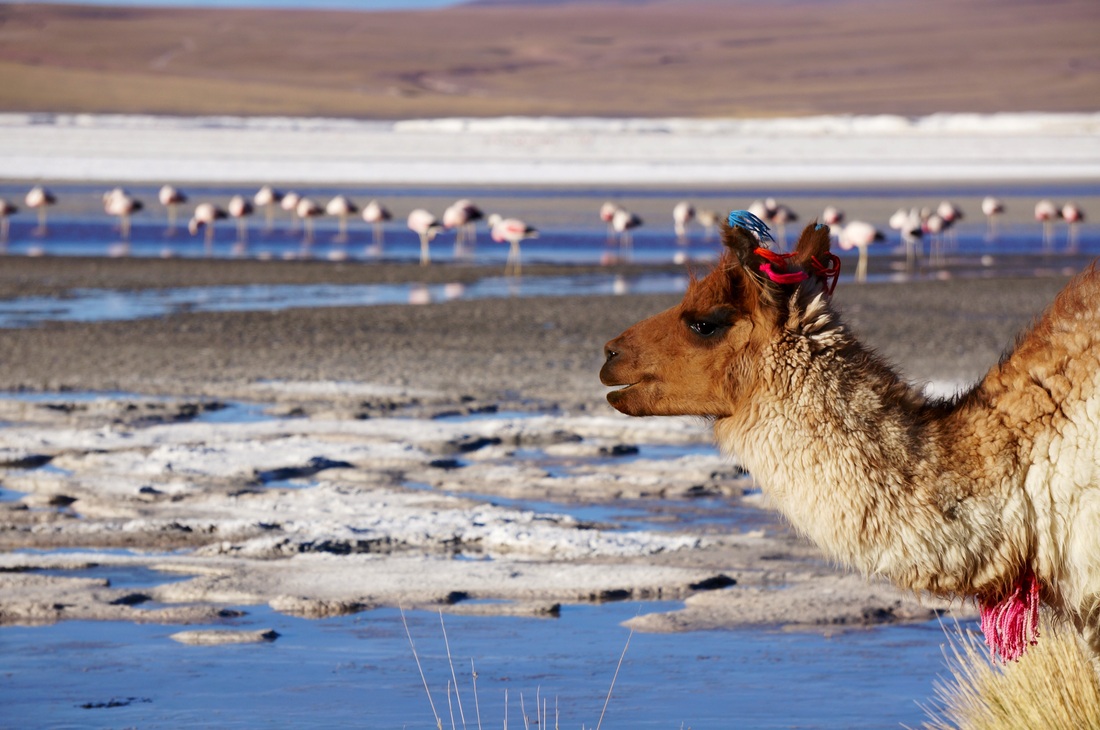
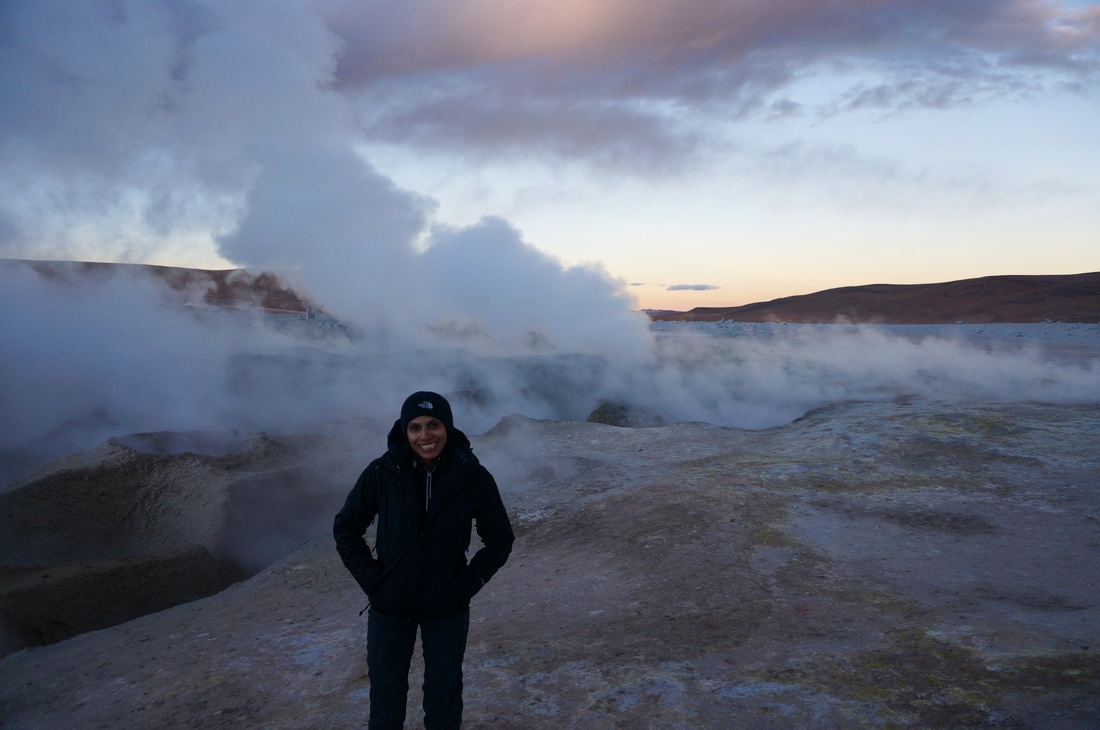
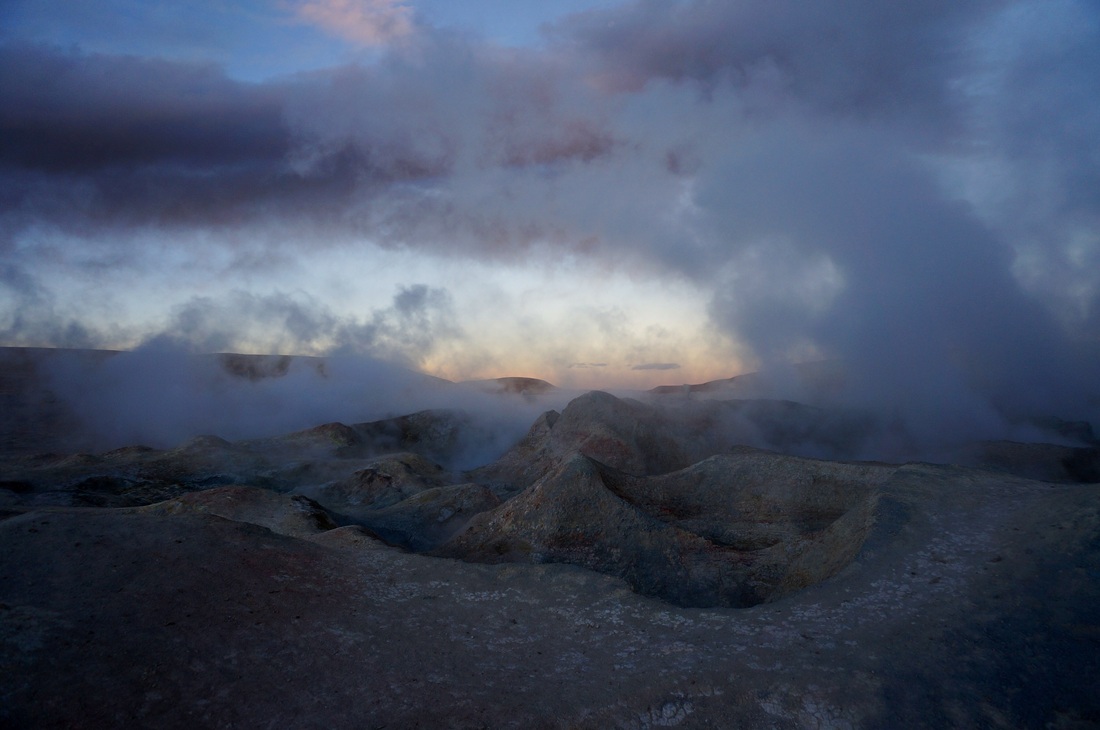
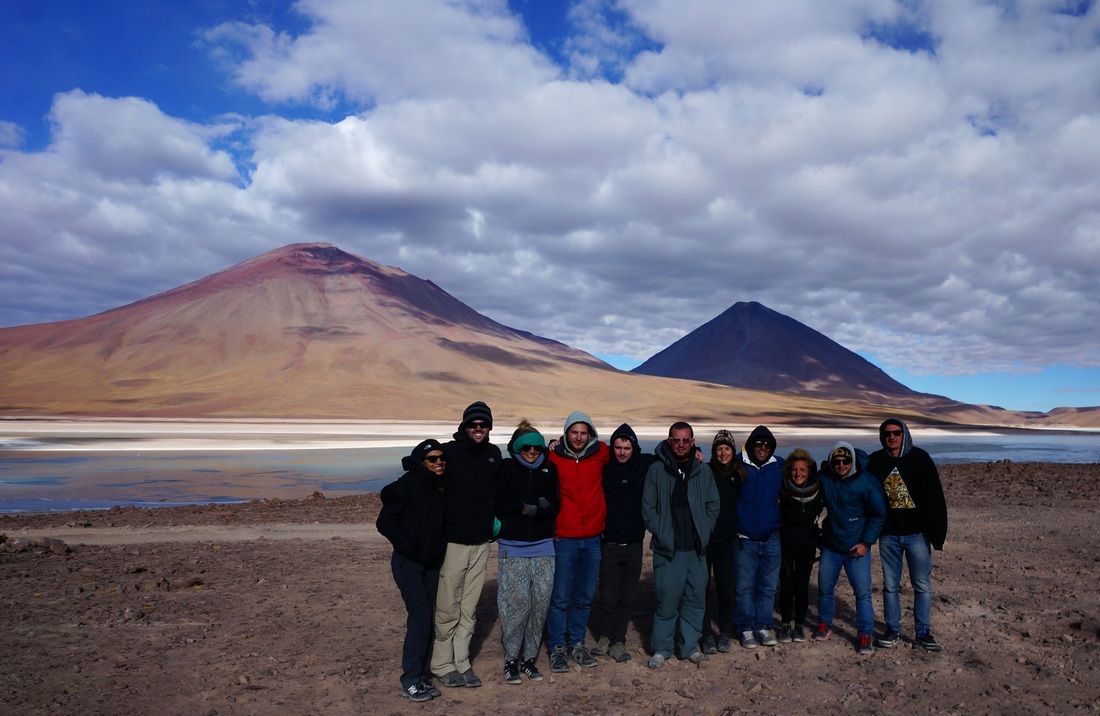
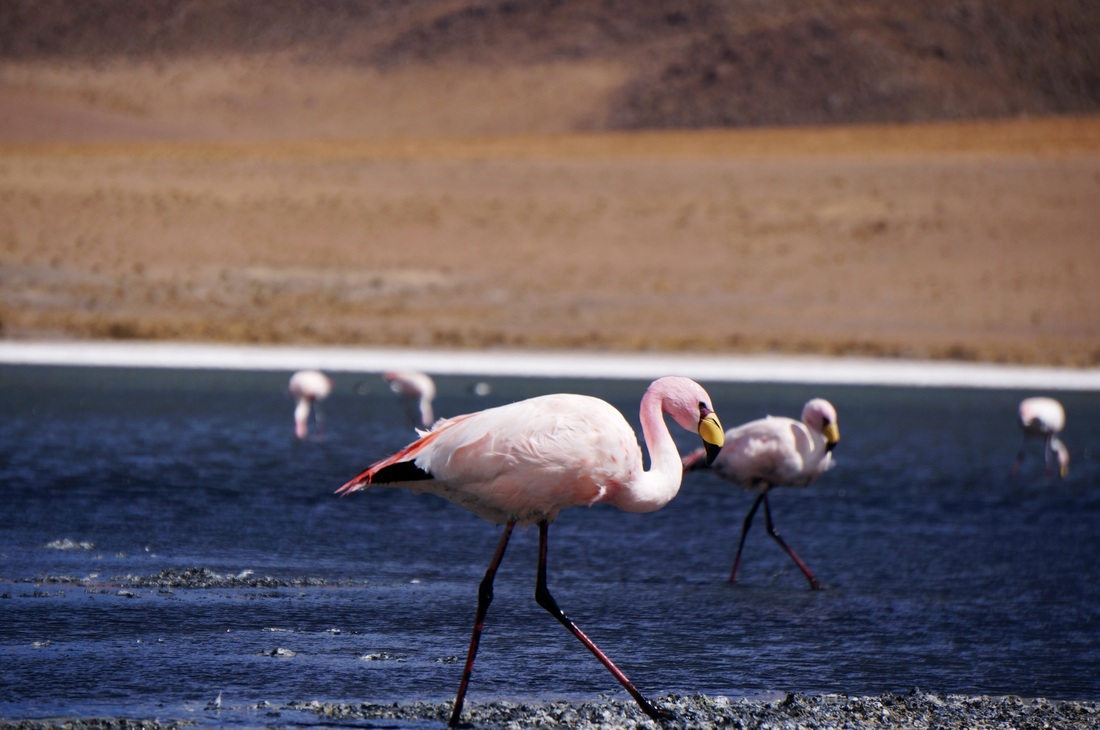
Day two started early as we drove from the edge of the salt flats to the neighboring desert. Over the course of the day we traversed the Bolivian side of the Chilean border and saw plenty of flamingos, unusual rock formations, volcanos and lagoons. At sunset we visited a field of geysers near the top of a semi active volcano, which at over 5000 meters was the highest we'd ever been. It was also the coldest part of our trip. At our hostel only a few hundred meters down the hill Cindy put on five layers of clothes before crawling into her sleeping bag, layering on blankets and complaining about still being cold. It didn't help that we had to sleep with the door open because of the scarcity of oxygen.
Picture
On the third day we visited one last lagoon before catching a bus across the border to San Pedro de Atacama in Chile. Although San Pedro is a rustic little town, we quickly realised we'd crossed into a more developed country. Almost all of the cars in town had been built this millennium, many of them in Europe. Unfortunately, prices were substantially higher, with very average meals costing more than Bolivian fine dining.

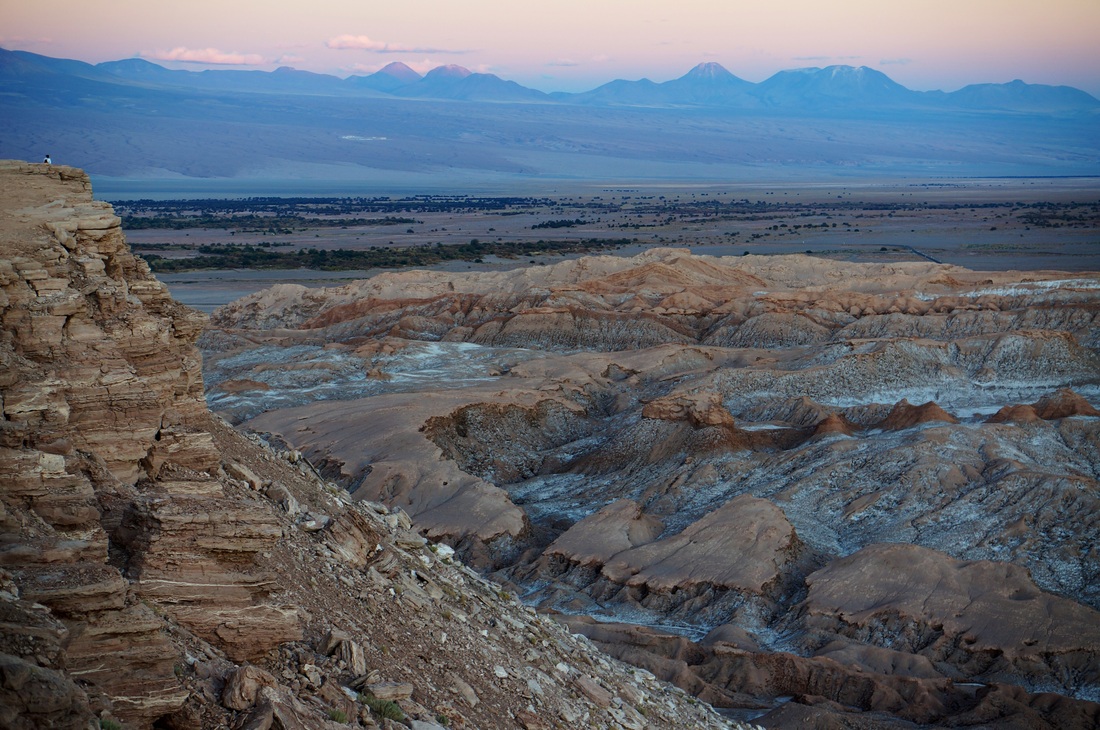
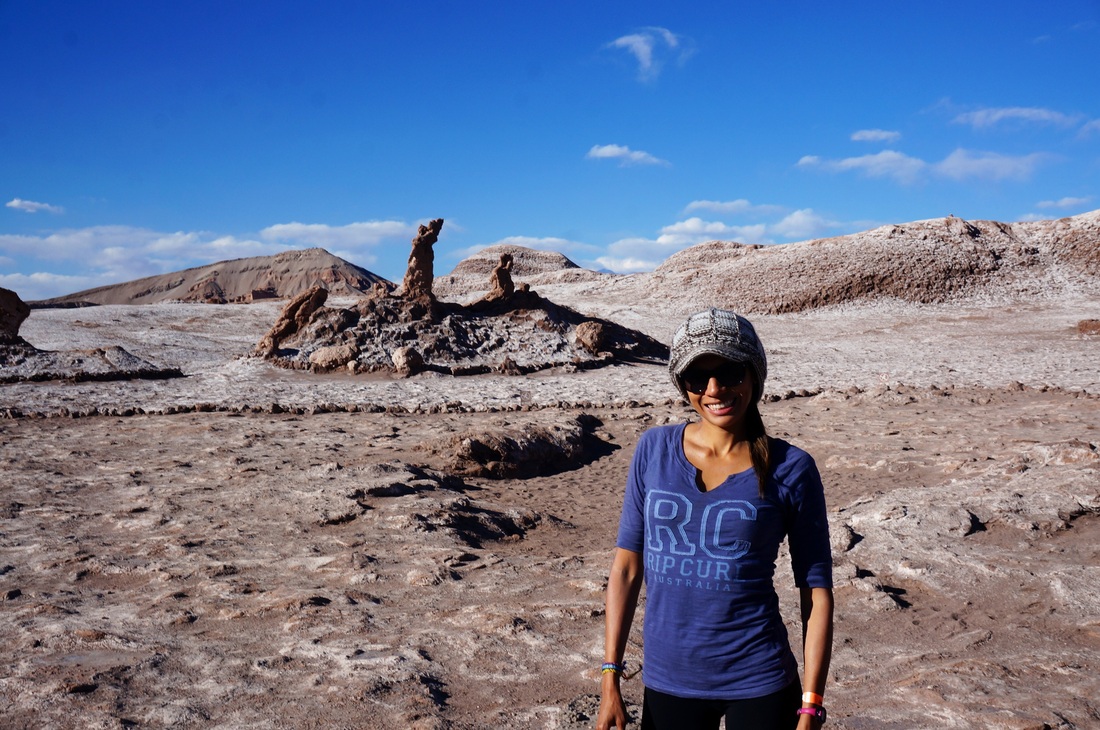
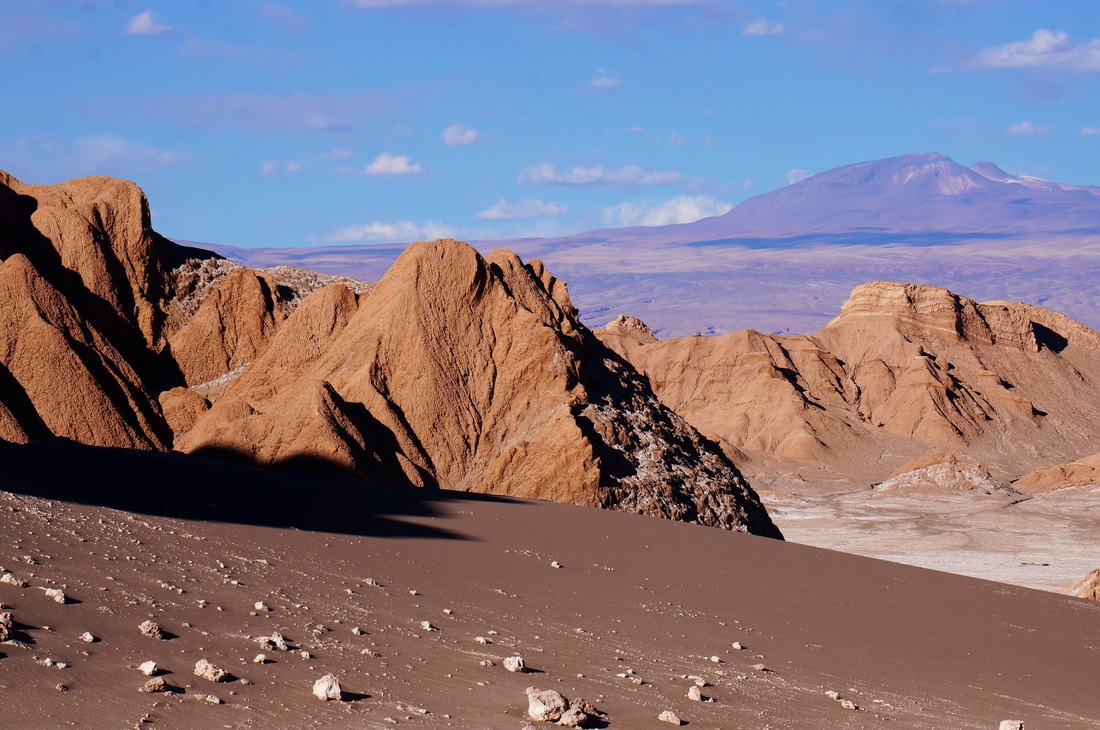
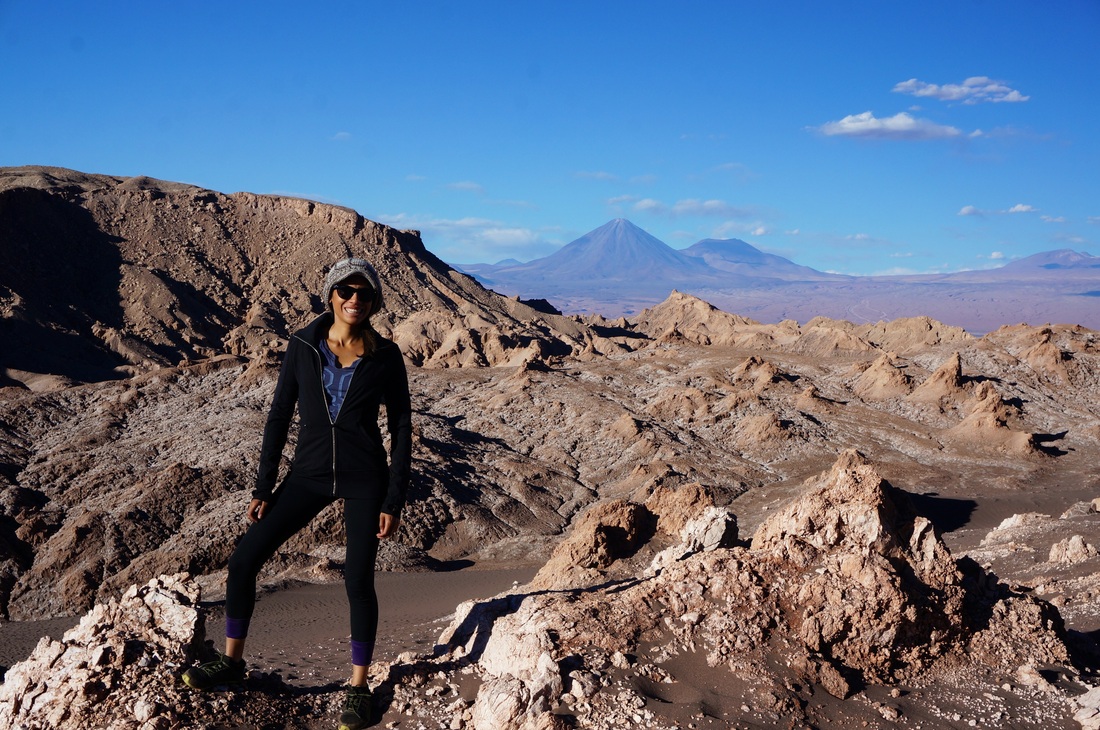
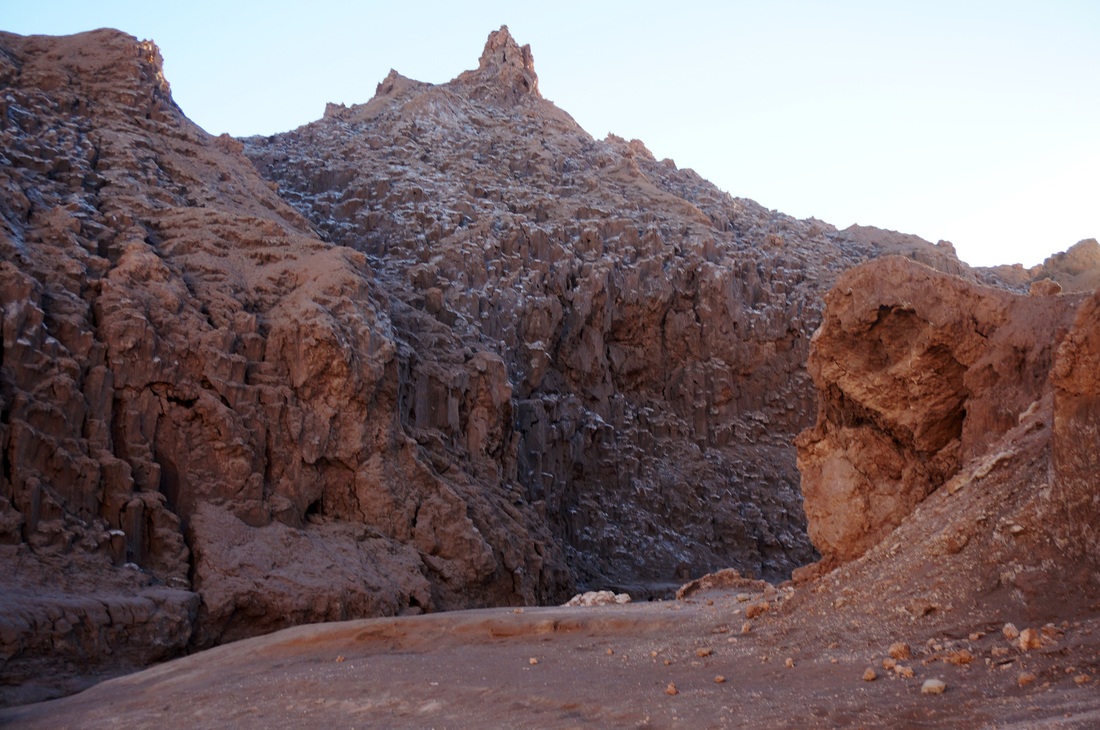
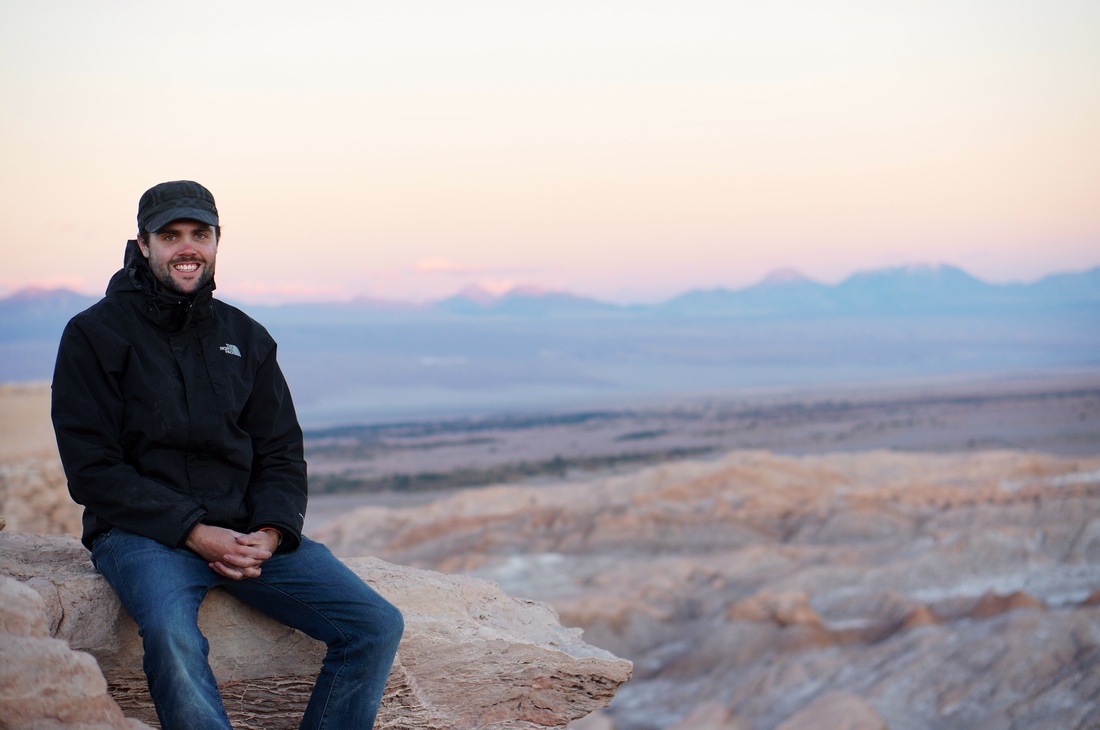
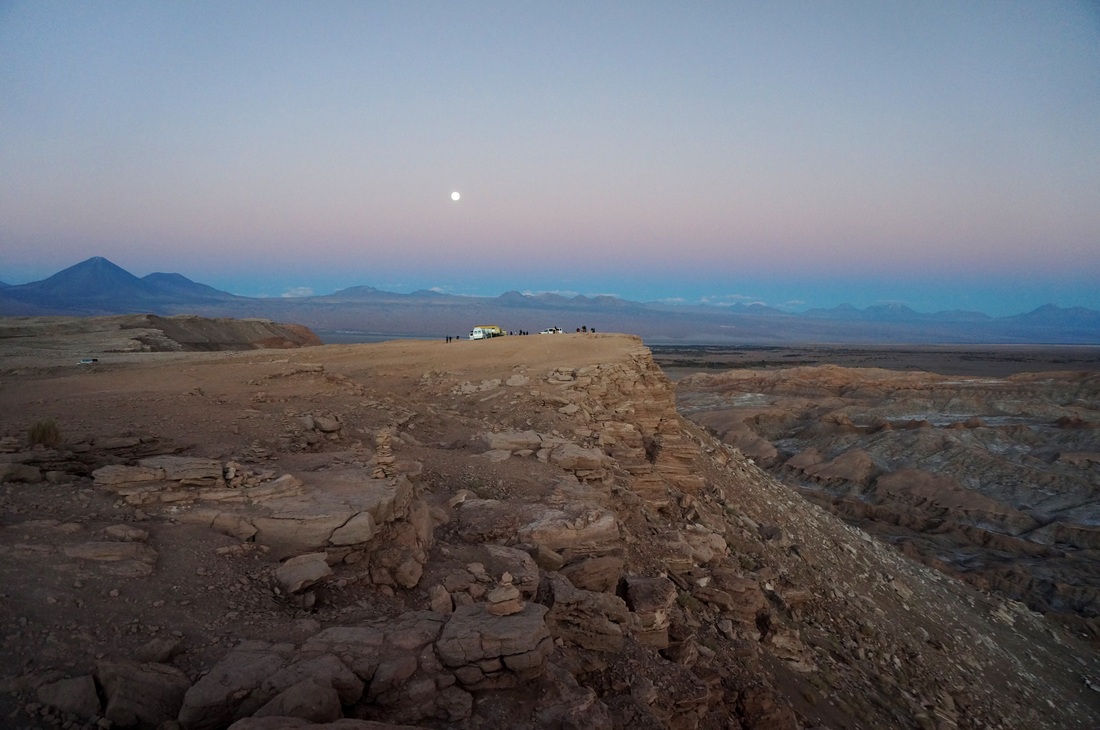
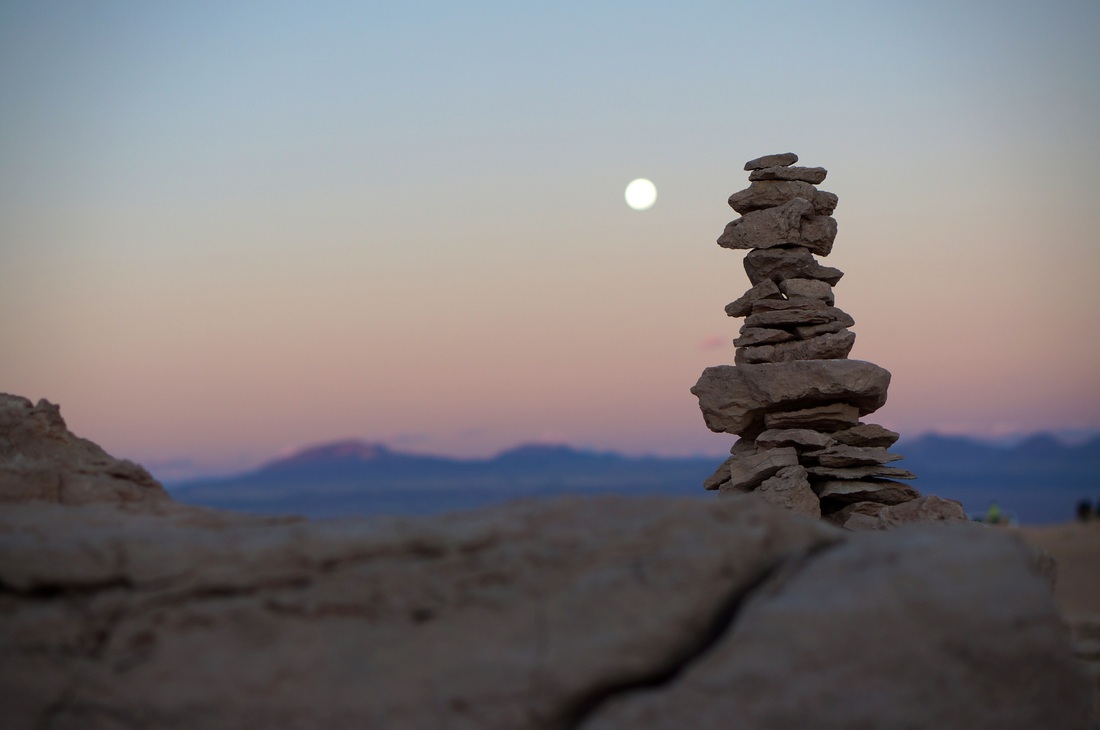
Tourists use San Pedro as a base to take day tours featuring geysers, lakes and all sorts of other things we'd already seen plenty of in the preceding couple of days on our way across from Uyuni. One unique sight is the Valle de la Luna (Moon Valley), a rocky red desert valley that really looks, as the name suggests, unworldly. Seeing the sun set over the valley was a particular highlight. After a couple of relaxing days in San Pedro de Atacama we took a short bus ride to the larger, but unremarkable, town of Calama to catch a flight to Santiago
Picture
2 Comments

La Paz, Death Road & Sucre

5/25/2014

5 Comments

 
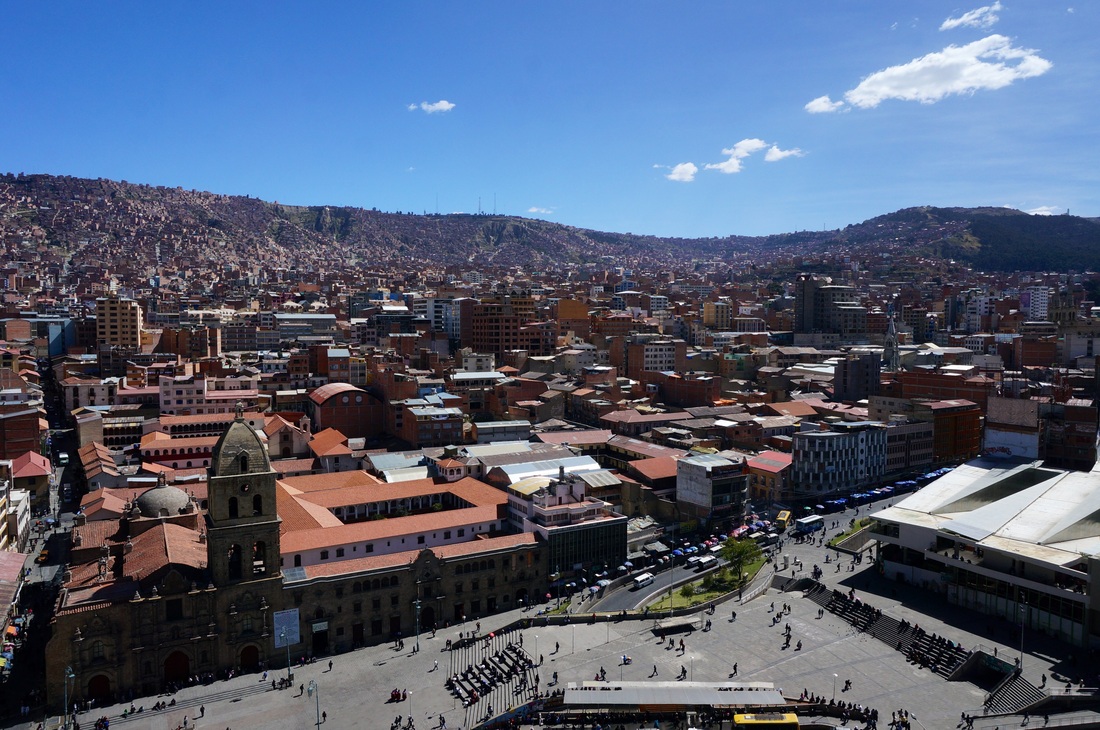
By the time we reached Bolivia we had been in third world countries for almost two months, but even so we were more than a little shocked at the view from the bus as we entered the outer suburbs of La Paz. Thankfully the post-apocalyptic scene in the El Alto region (near the airport) gave way to dramatic scenery and relative civilization as we descended into the city centre (which sits in a large valley).
Picture
We had a little bit of fun getting to our hostel, the Loki. We'd heard that the Loki had recently moved to a new building but despite giving very clear directions our cab driver took us to the old Loki (we're sure in the hope that from there he'd be able to extract a further cab fare on to the new Loki). After Sam took photos of the driver's number plate and license and Cindy threatened reporting him we managed to get to our hostel without paying any more.

The Loki is owned by Aussies and has a reputation for partying. Although it certainly doesn't encourage sobriety, and welcomes staff leading amateur strip shows on bar tops, there is apparently a line that you don't want to cross. At 4am on our first night Cindy woke up to the sound of an intoxicated guest getting kicked out of the hostel. When he argued that he can't be thrown on the street at that hour, the response was an unsympathetic 'welcome to Bolivia'.

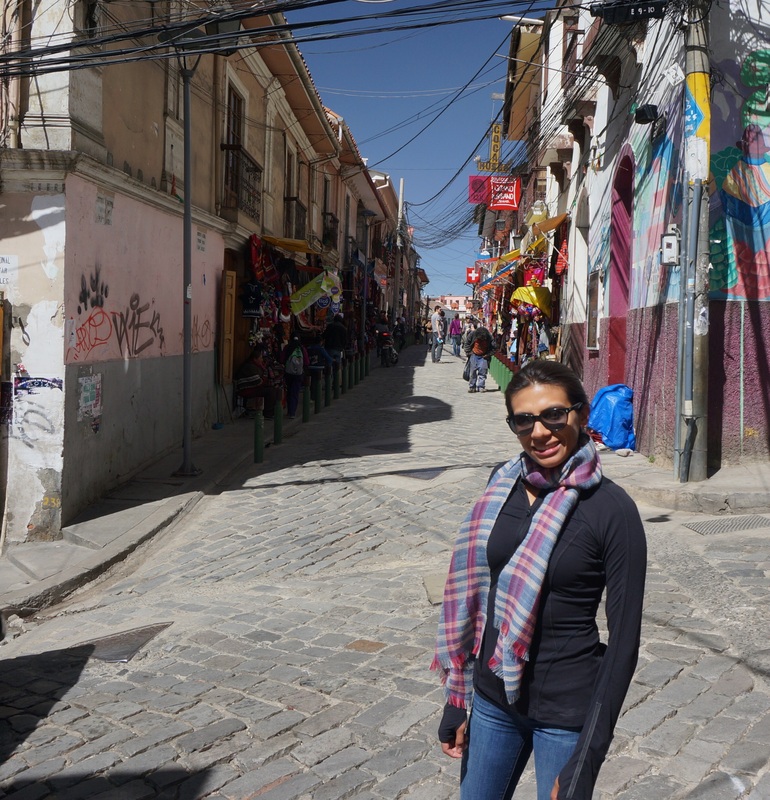
The best  way to get an introduction to central La Paz is on a walking tour. Our tour started outside the San Pedro Prison, made famous by the book Marching Powder. Those who have read the book would know this is an unusual facility, where nasty criminals live with their families and need to generate enough money to rent their cells (the most expensive of which feature cable tv and jacuzzis). For tourists the most important lesson is that if a bag full of white powder comes flying over the prison walls, don't pick it up unless you're friends with the drug lord who threw it and you've paid off the guards.

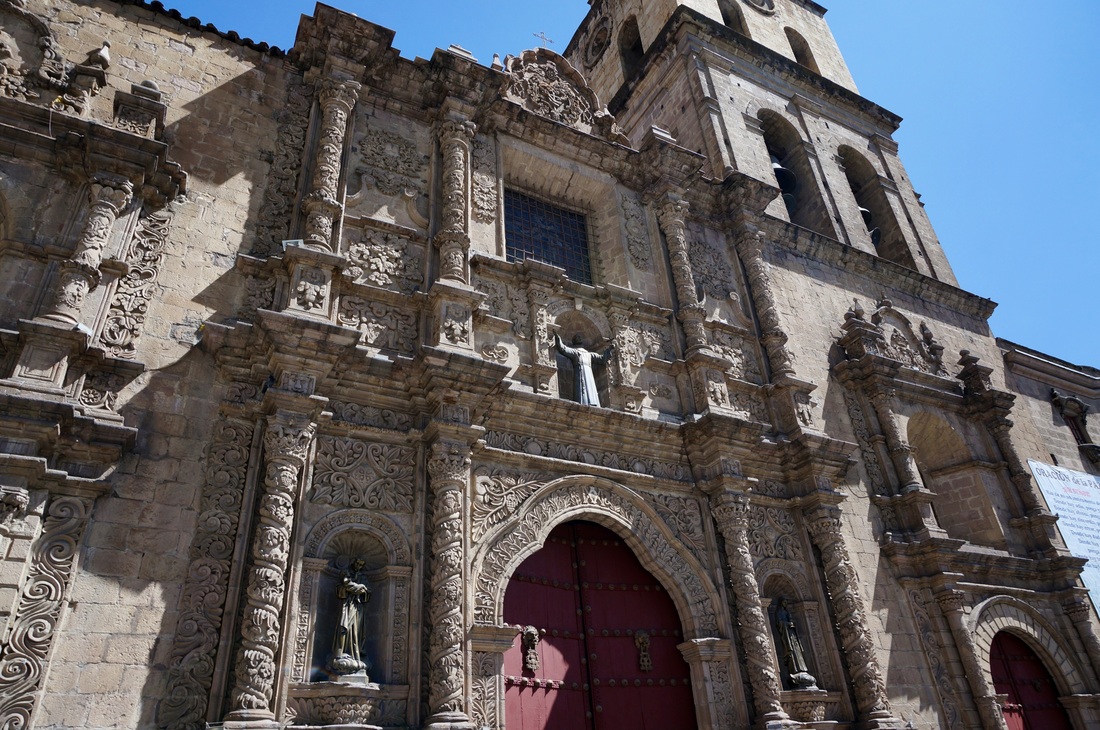
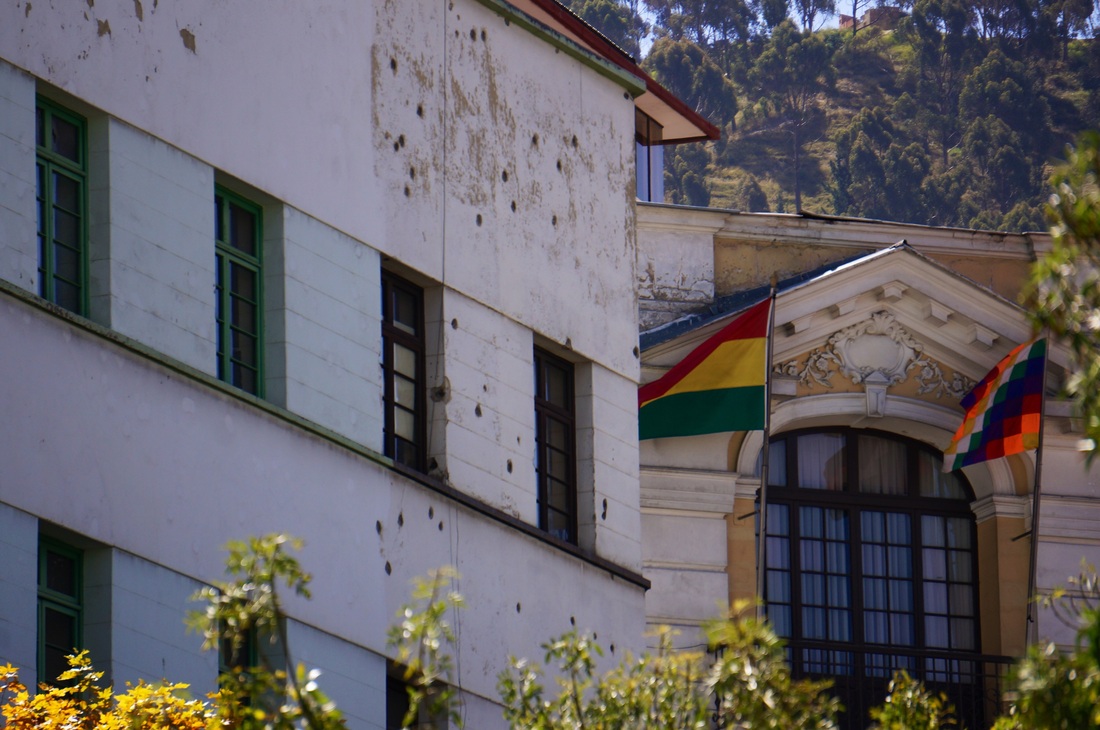
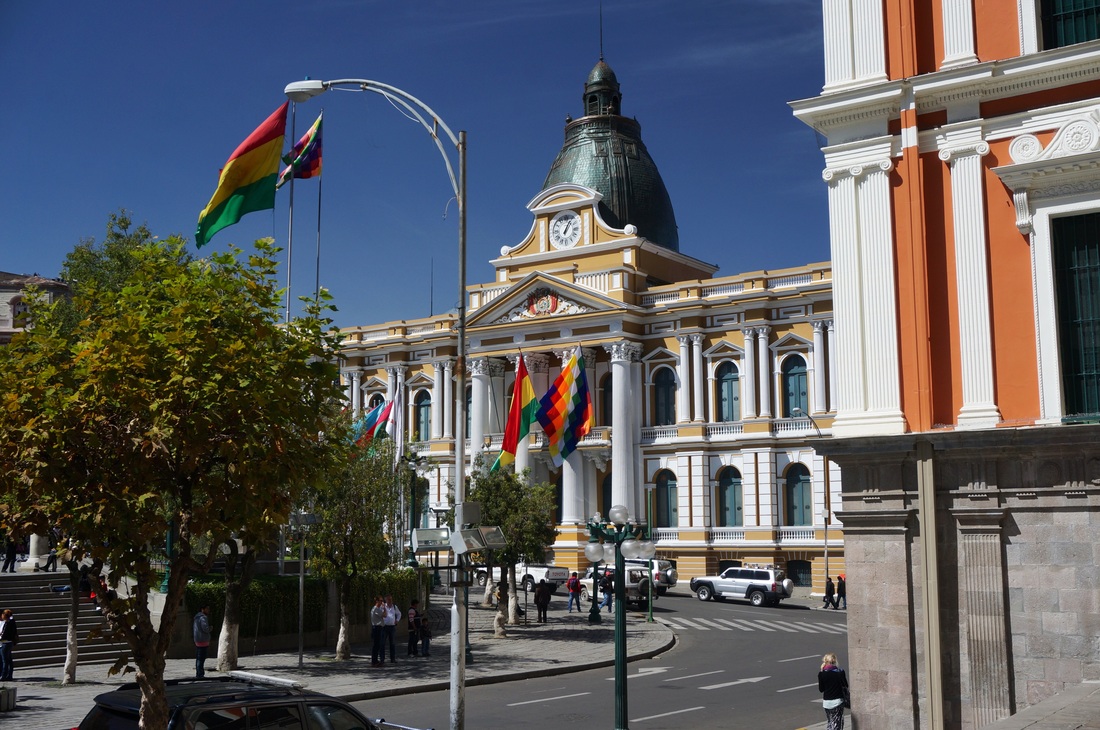
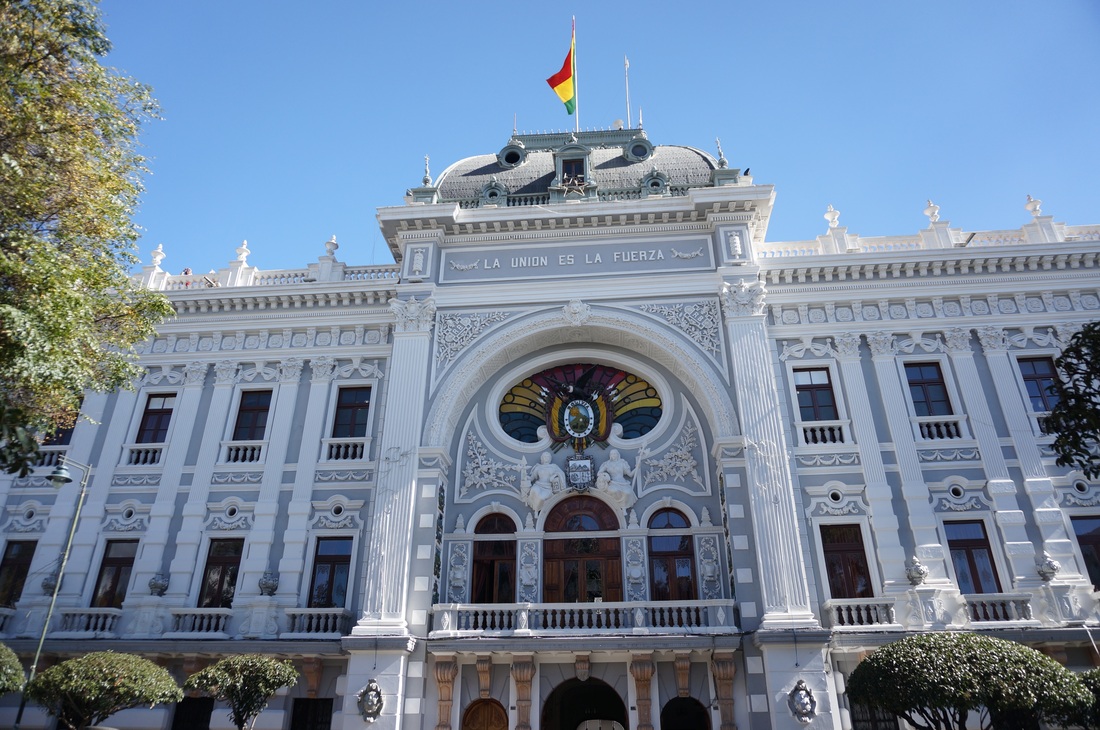
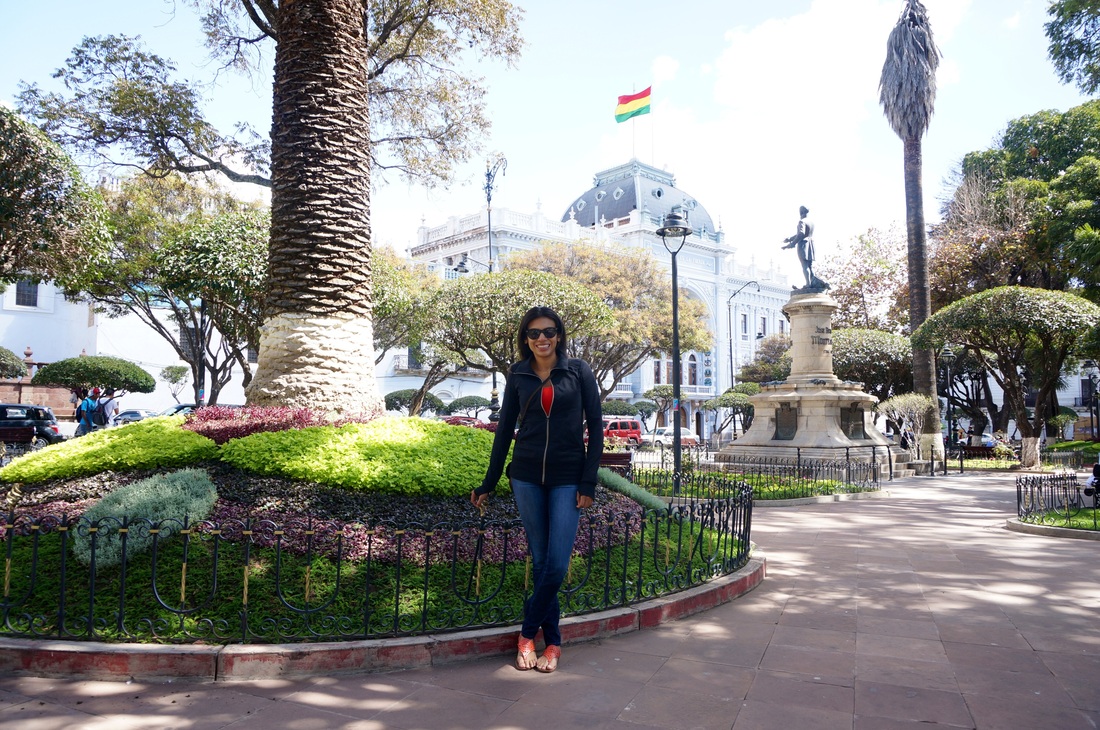
Our tour then took us through the city's market (where you can buy a hundred different types of potatoes and if you're lucky one or two other types of veggies). We also saw some beautiful churches, plenty of alpaca clothing stores, the beautiful (if you excuse the bullet holes in some buildings) presidential square and a nice view from the tallest building in town.

At night we heard that some travelers who are much more brave than us head to a bar that offers cocaine as well as beer, wine and spirits. This wouldn't interest us anyway, but even if it did you'd hate to be there on the day that the bar owner and police had a disagreement over the payment of bribe money. In Bolivia if you get caught in the vicinity of cocaine then they generously give you eight years in prison to prepare for your first day in court. 

We much preferred to spend our down time in La Paz enjoying some of the surprisingly nice food on offer in some very good value restaurants. Our most memorable meal was a true fine dining experience, featuring beautifully cooked llama, nice wine and artistic presentation for only $15 each.

We enjoyed another memorable meal at a middle eastern restaurant (not as strange as it sounds, as there is a massive Israeli population in La Paz). At this restaurant we were lucky to meet some Israeli tourists who then took us leather shopping, helping us understand all the shop signs (which were in Hebrew) and negotiating a reduced 'Israeli price' for Cindy's now favorite leather handbag.

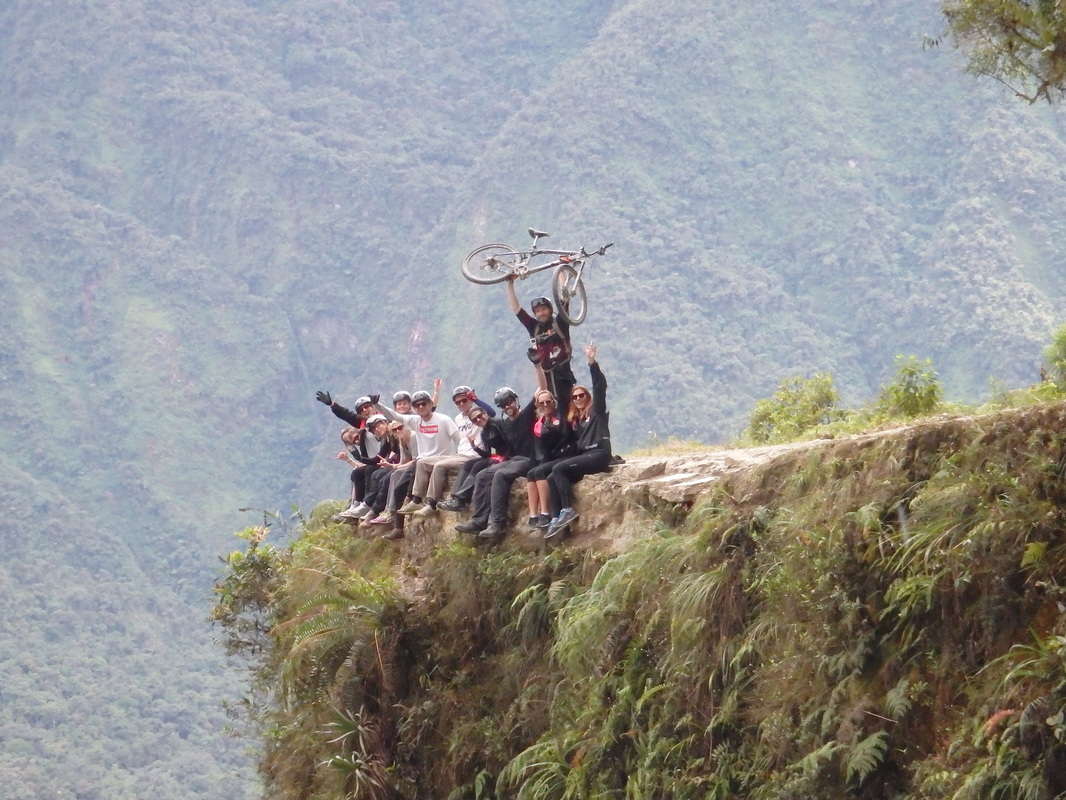
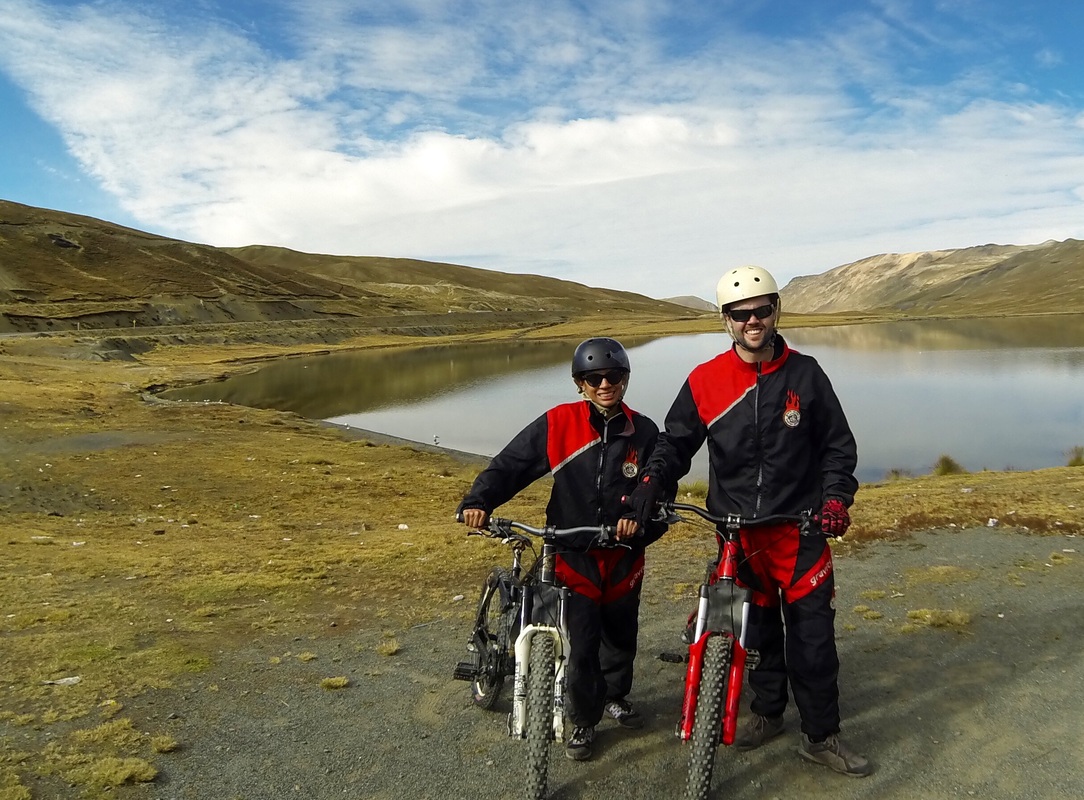
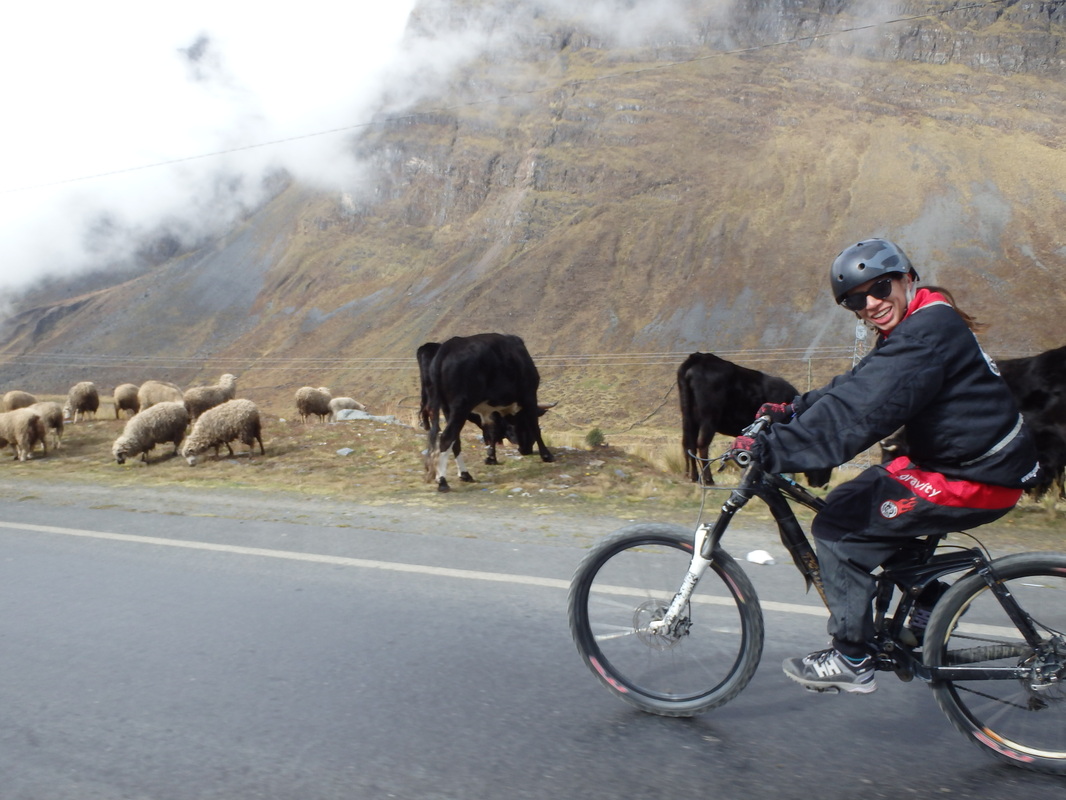
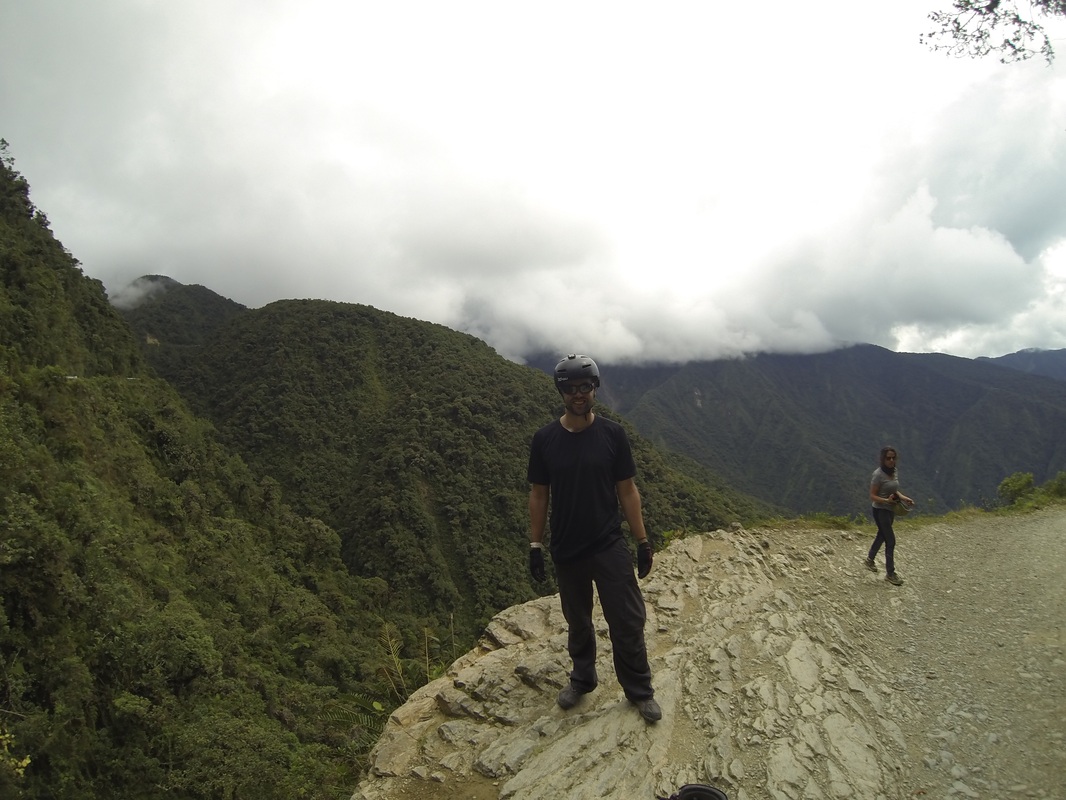
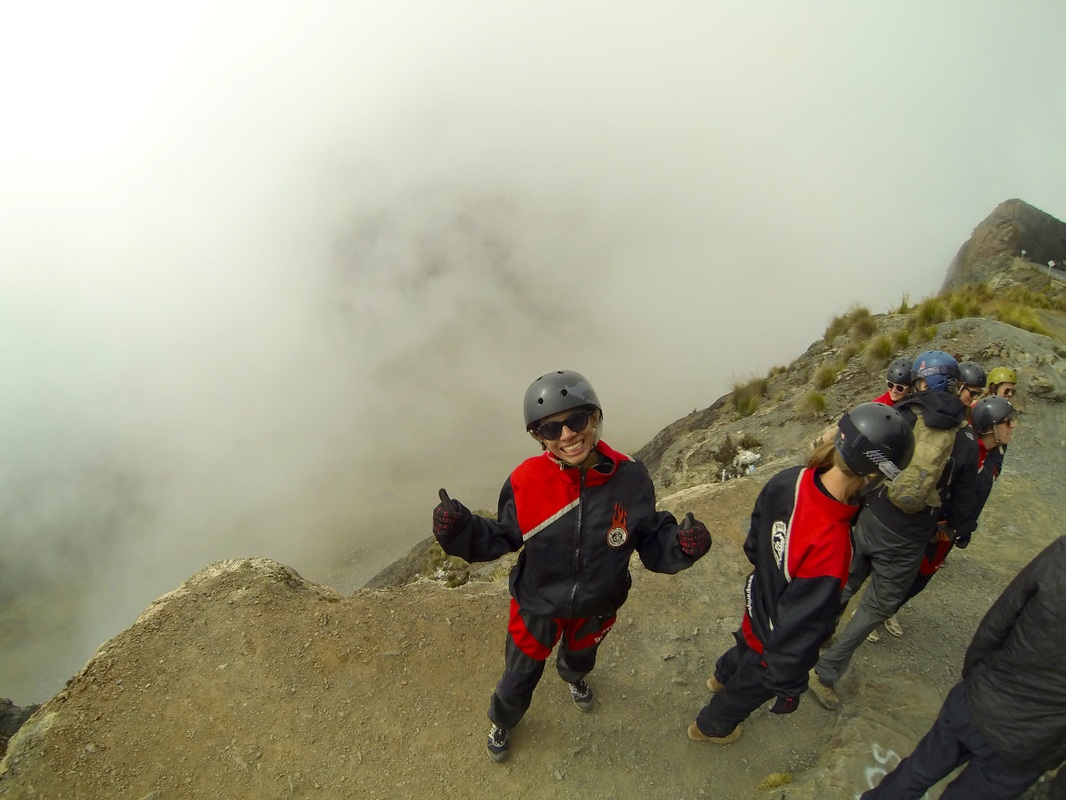
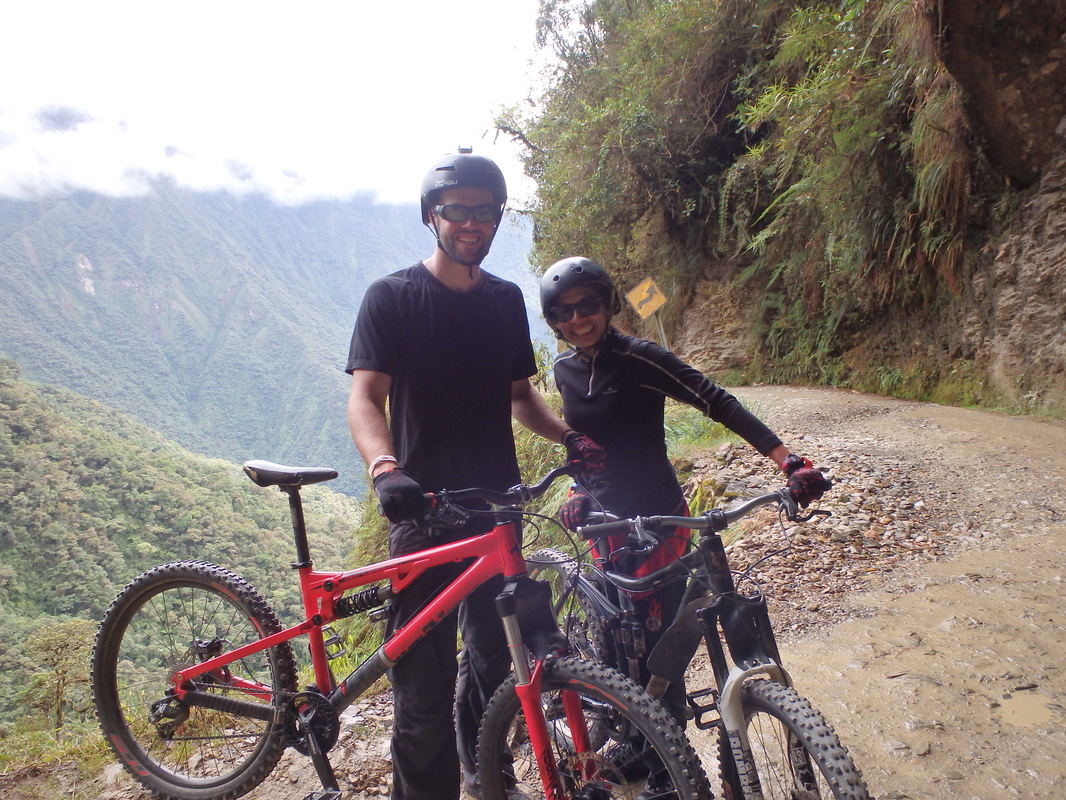
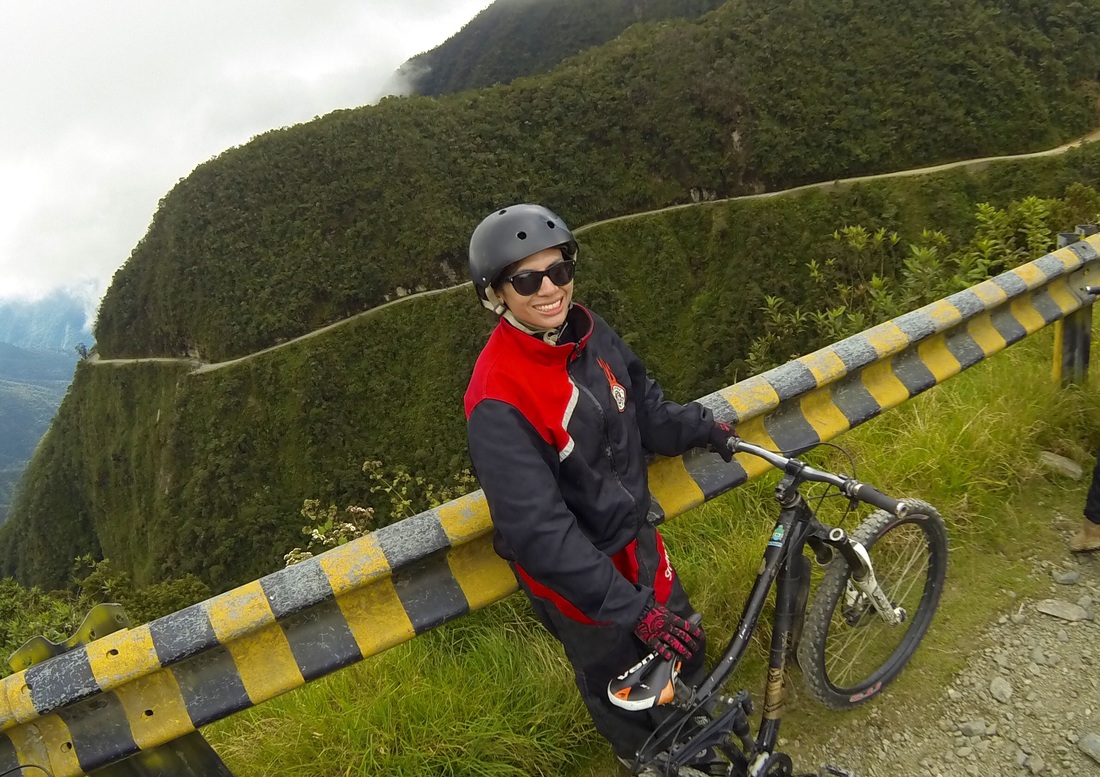
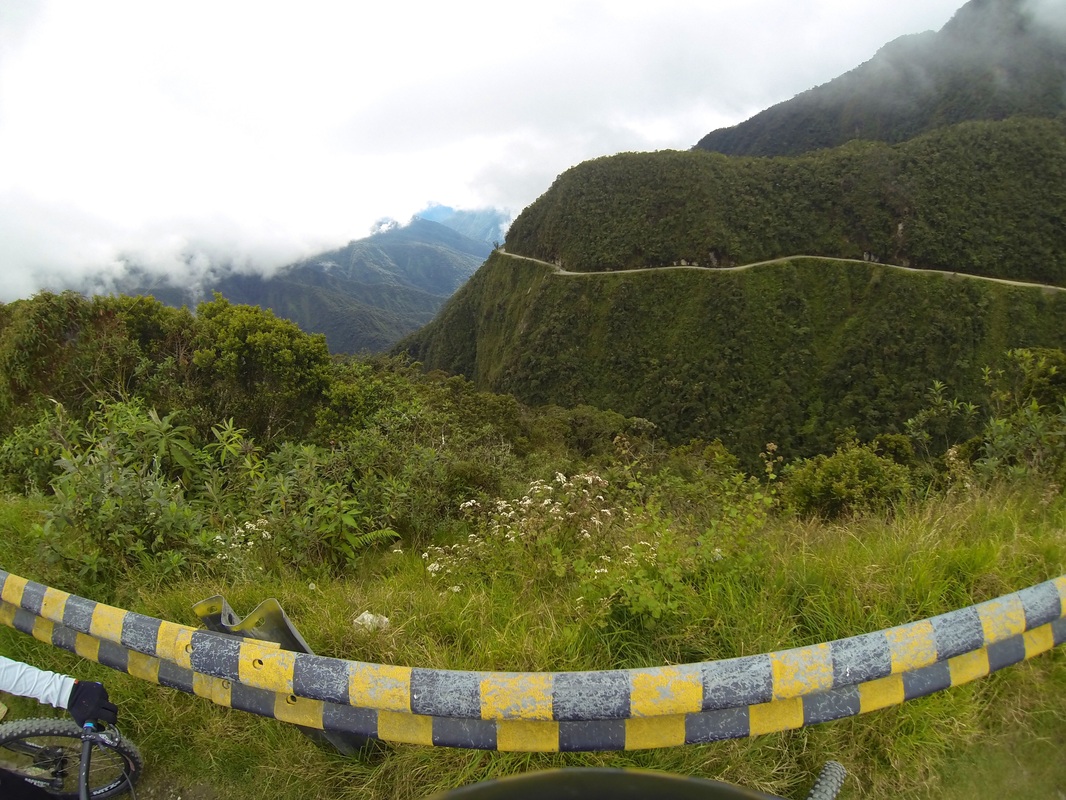
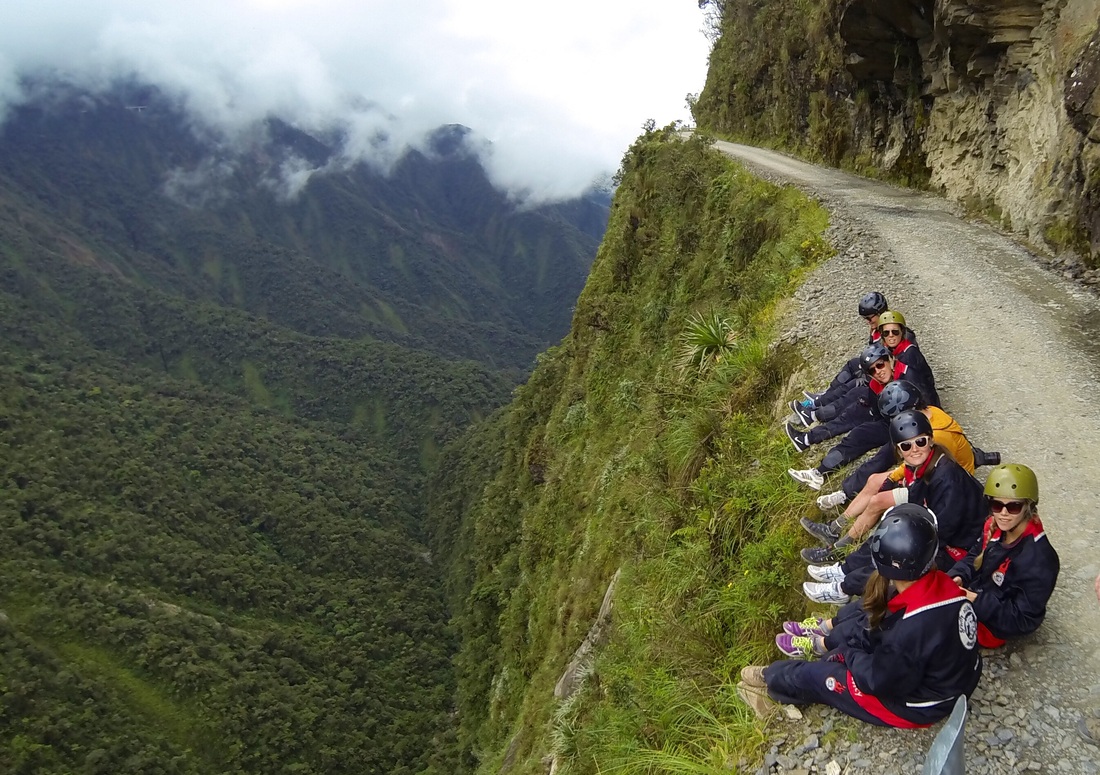
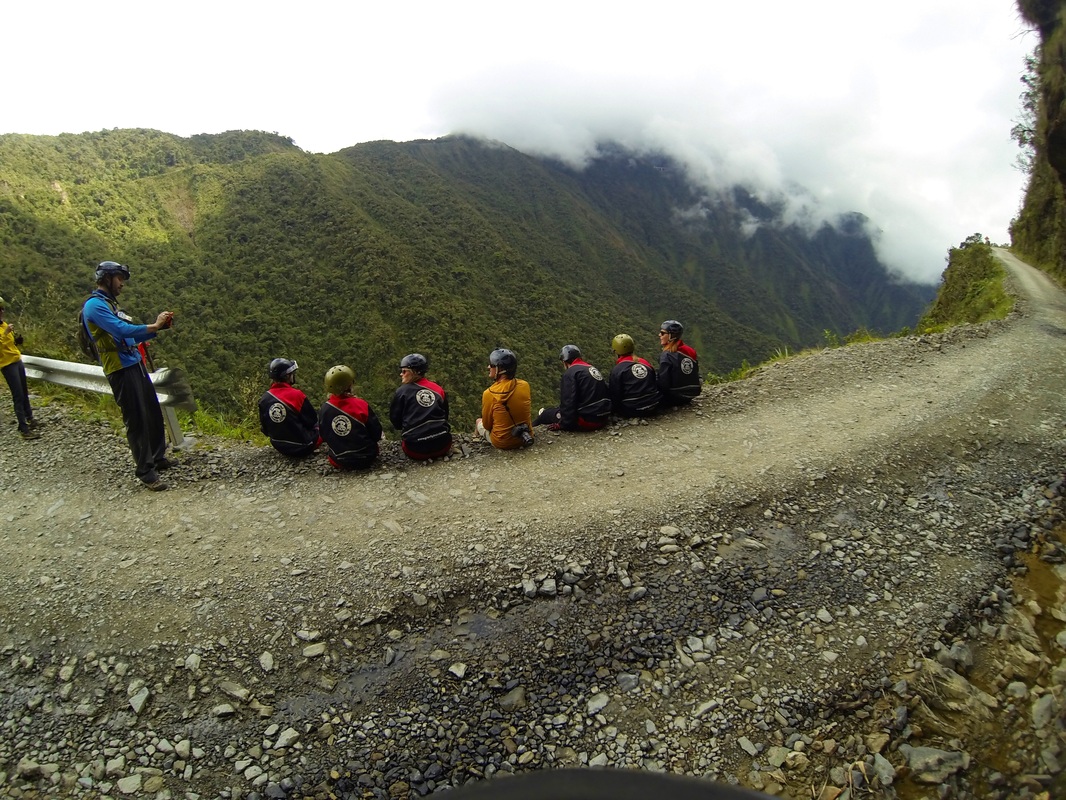
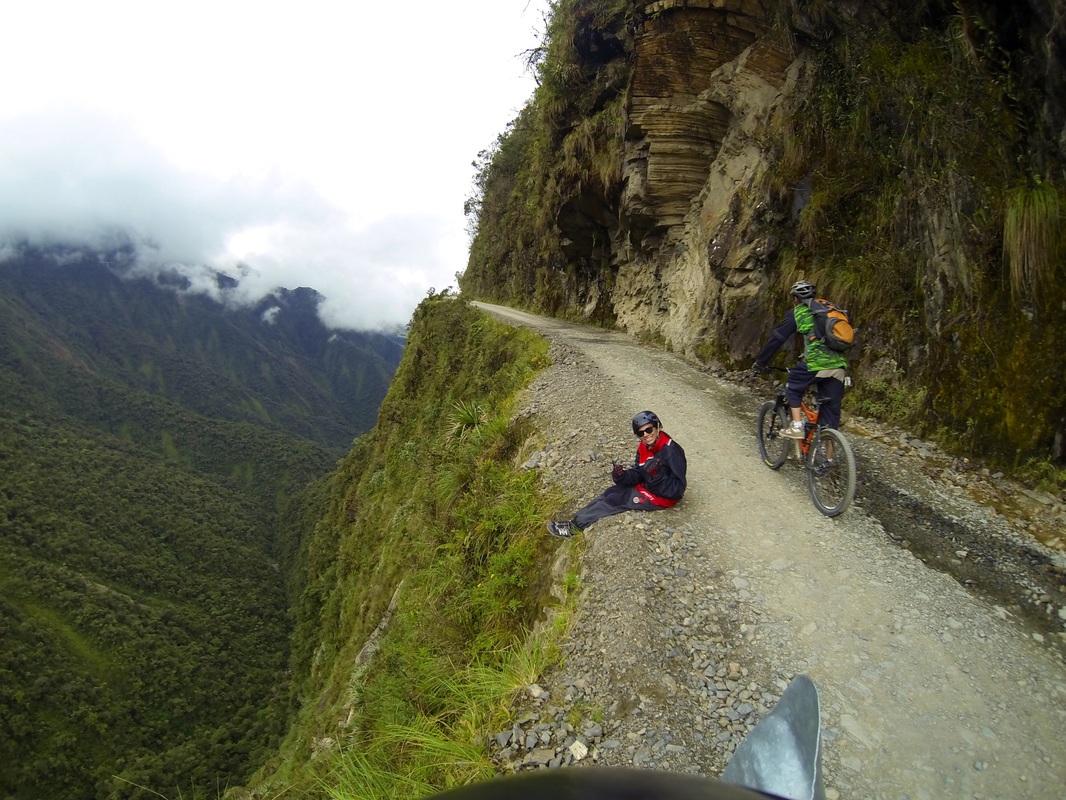
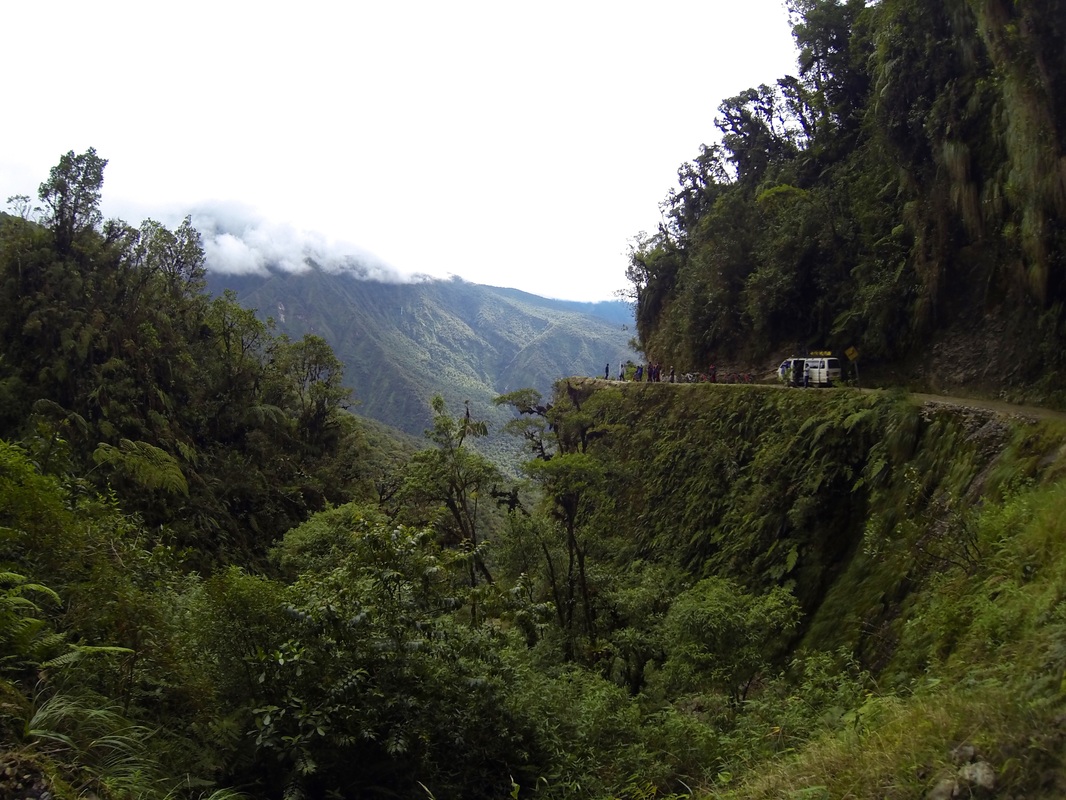
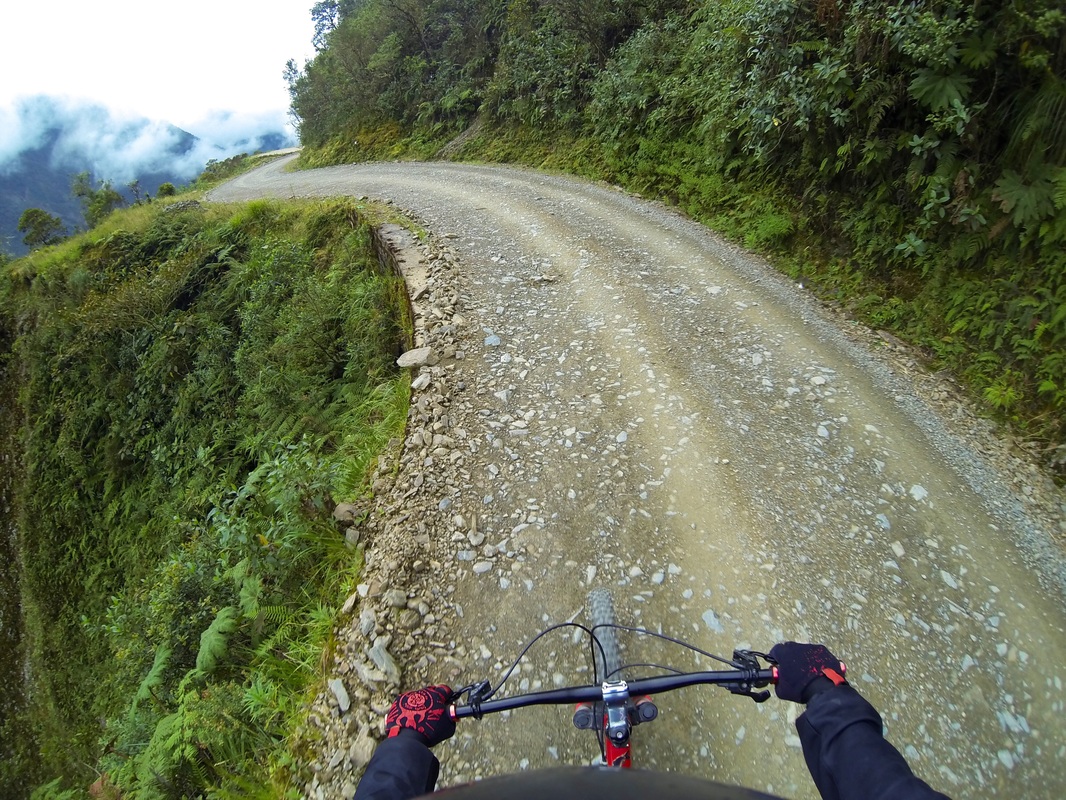
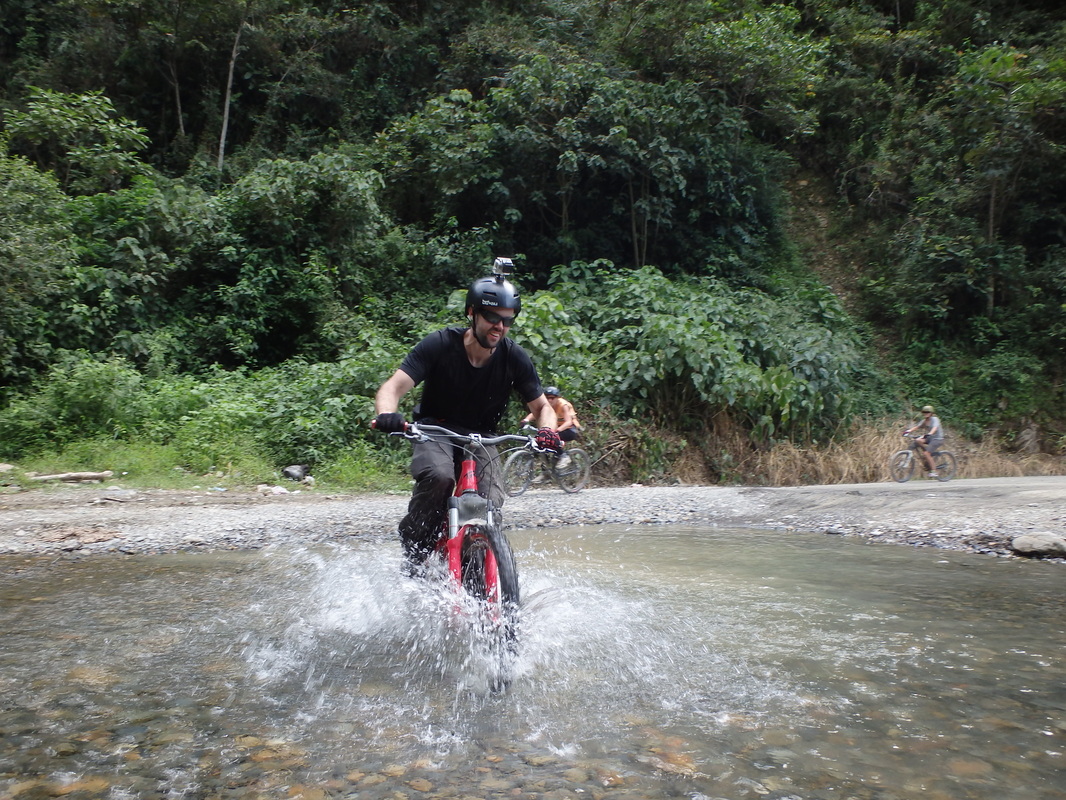
The main attraction for us in La Paz was using it as a base to bike 'death road', a 64km descent down a narrow (as little as 3 meters wide), mostly gravel, road that starts at a chilly altitude of around 4800 meters and finishes in the hot jungle at 1100 meters. Our tour guide preferred the official, slightly less morbid, title 'the world's most dangerous road'. Both titles are deserved, given the road's long history of regular and nasty accidents (the worst killed 100 people). In 2007 a less dangerous road was built nearby that now attracts most traffic, leaving death road to mostly be used by cyclists, support vehicles and local villagers.
Imagen
A regular dilemma for backpackers is knowing when is the right time to save money and when you just need to go for the most expensive option. Although the most expensive tour company for death road, gravity, cost twice as much as others, and although we could have enjoyed fine dining every night for a week for the same price, our instinct told us that gravity was the way to go.

In the end, we had great bikes, great weather, no injuries (excepting Cindy was sore for a few days as a result of being so stiff on the bike), and therefore no regrets. We're both glad we did it, although Sam probably enjoyed the experience a bit more than Cindy. It was scary (particularly because of the uneven road) but the fast bits were exhilarating, the scenery was incredible and the 3700 meter vertical drop was an amazing accomplishment (particularly for an Aussie whose highest mountain back home is only 2228 meters above sea level).
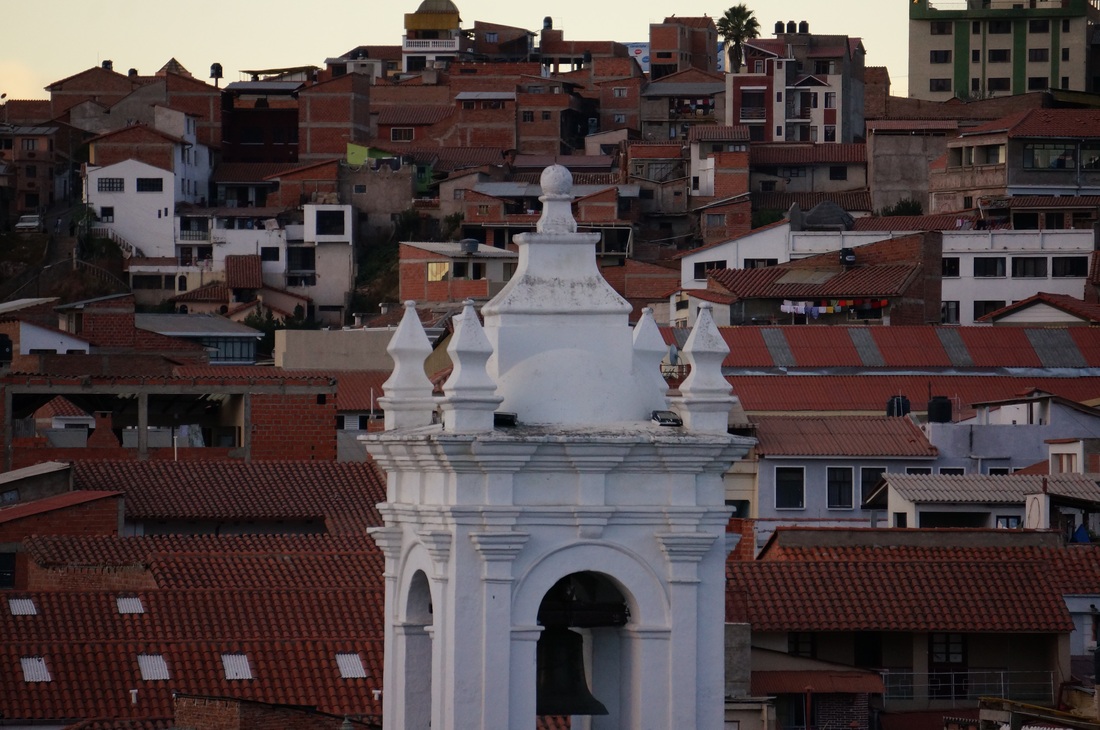
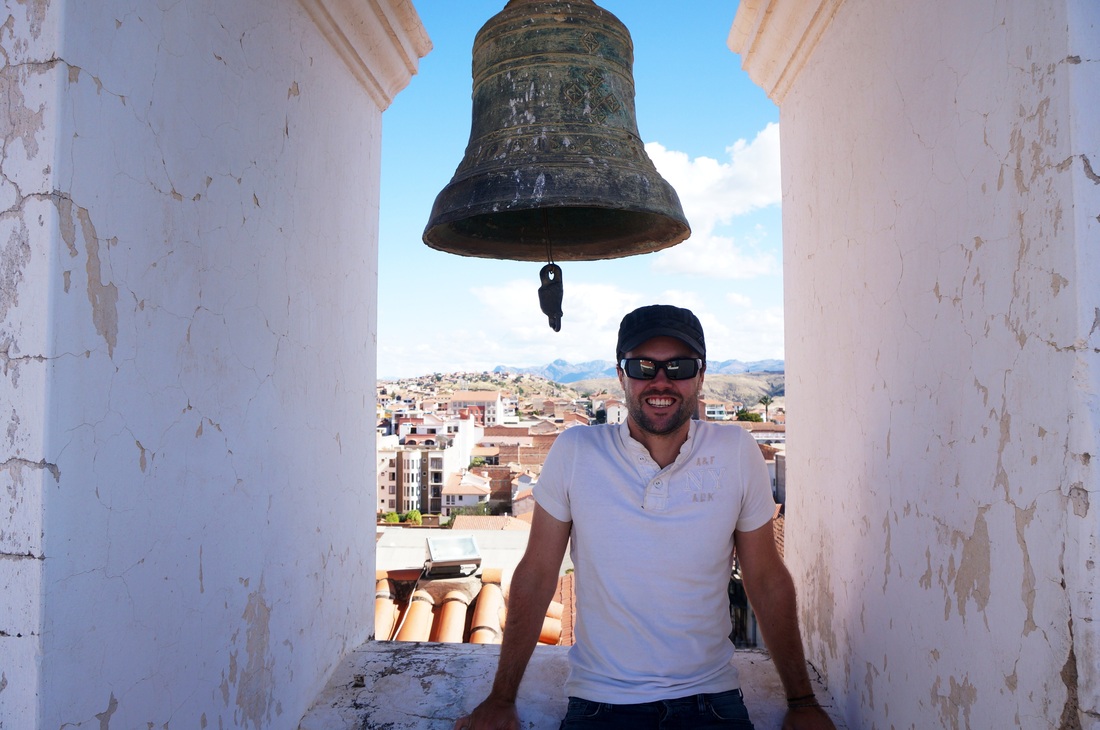
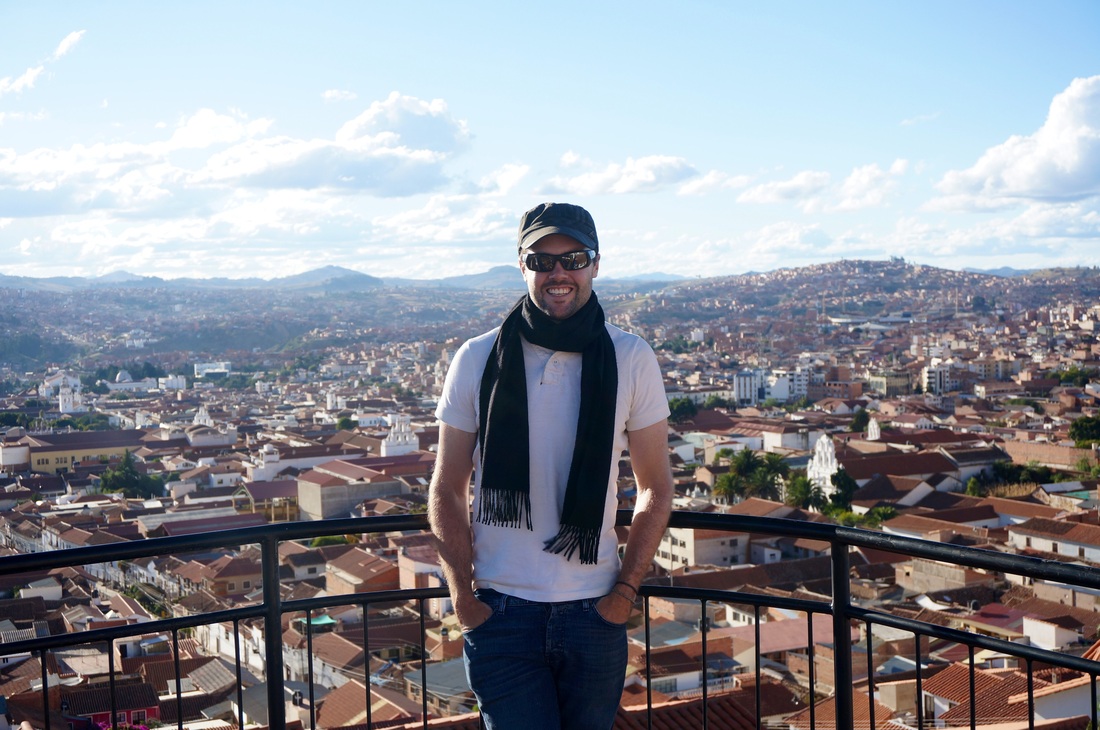
From La Paz we flew to Sucre, the constitutional capital of the country (La Paz is just the legislative capital); it's important to get that right not only for trivia nights but also because Bolivia had a civil war over the issue. Sucre is much smaller than La Paz, but also a much more historic and beautiful city. Although it doesn't appear on any bucket lists, we really enjoyed spending a couple of days exploring the colonial centre of town at a leisurely pace. It was nice to sleep in, enjoy light lunches at nice cafés and treat ourselves to some comfort food at night. The short relaxing visit was exactly what we needed before a busy and less comfortable 3-day tour from Uyuni to Chile.
Picture
5 Comments

Lake Titicaca

5/19/2014

1 Comment

 
From Cuzco we took an overnight bus south to Puno. Puno sits at the northern end of Lake Titicaca, which is the world's highest navigable lake and is shared by Peru and Bolivia.

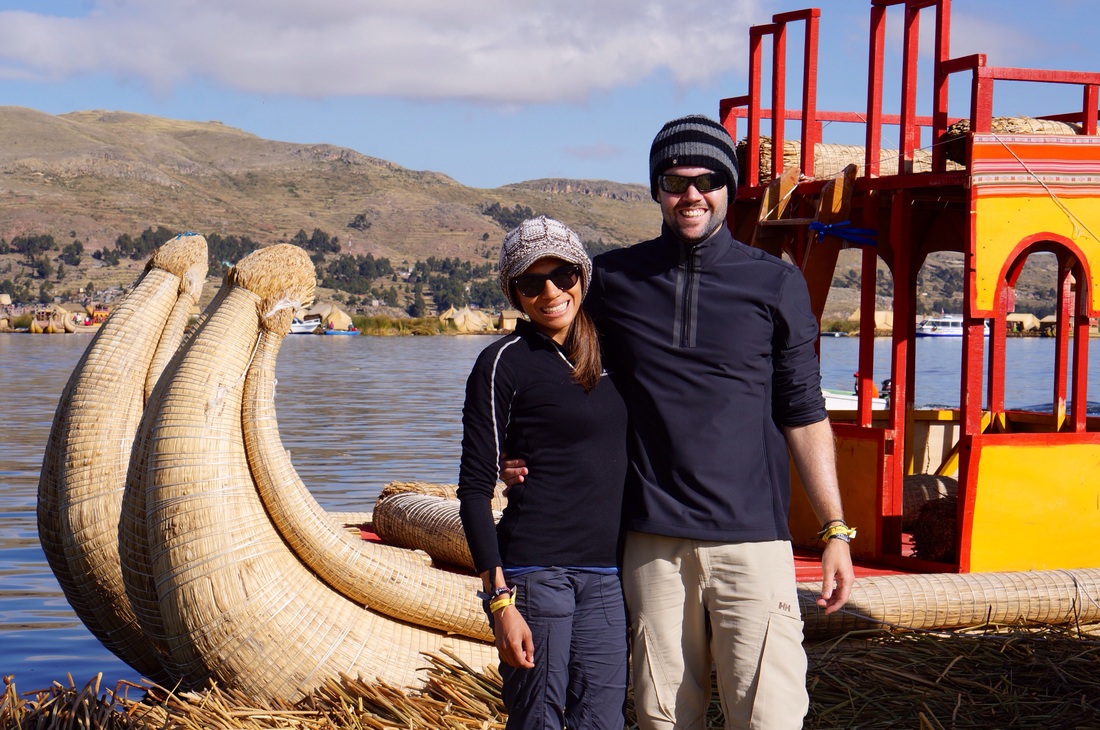
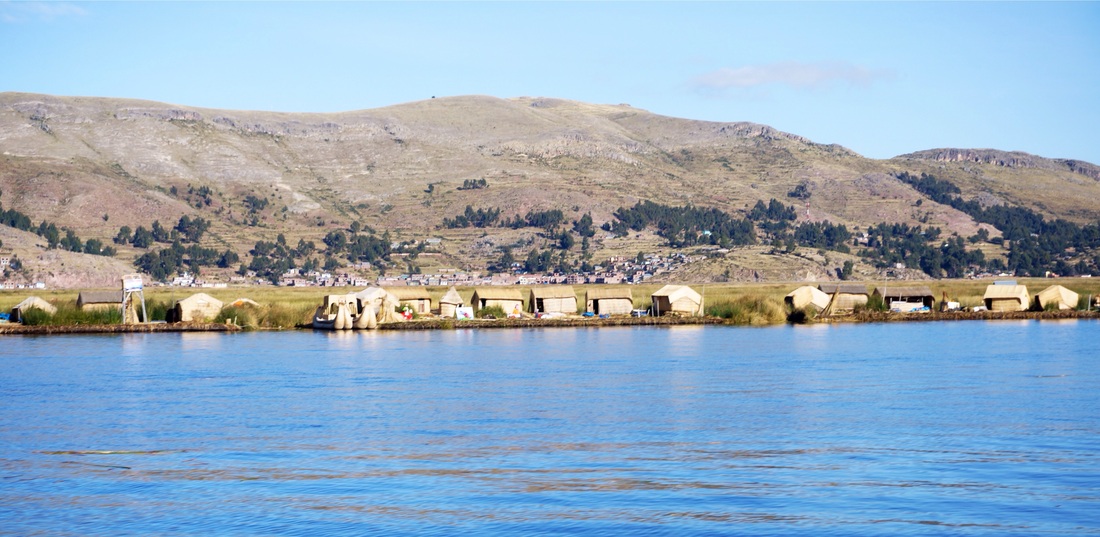
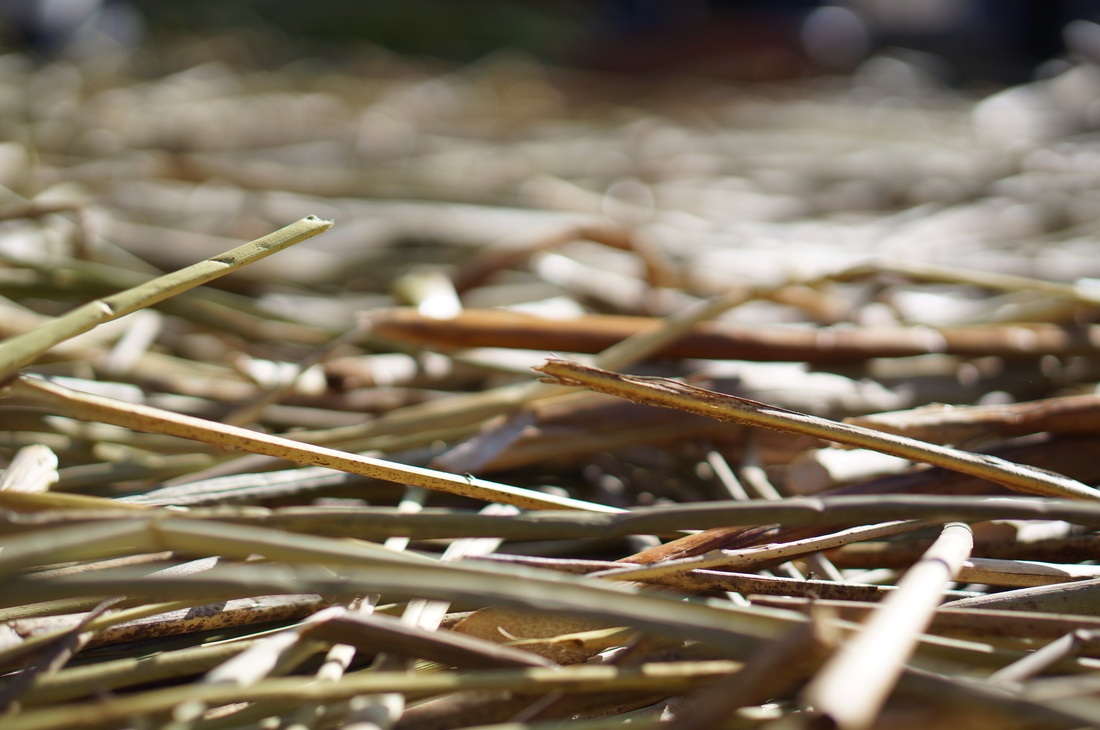
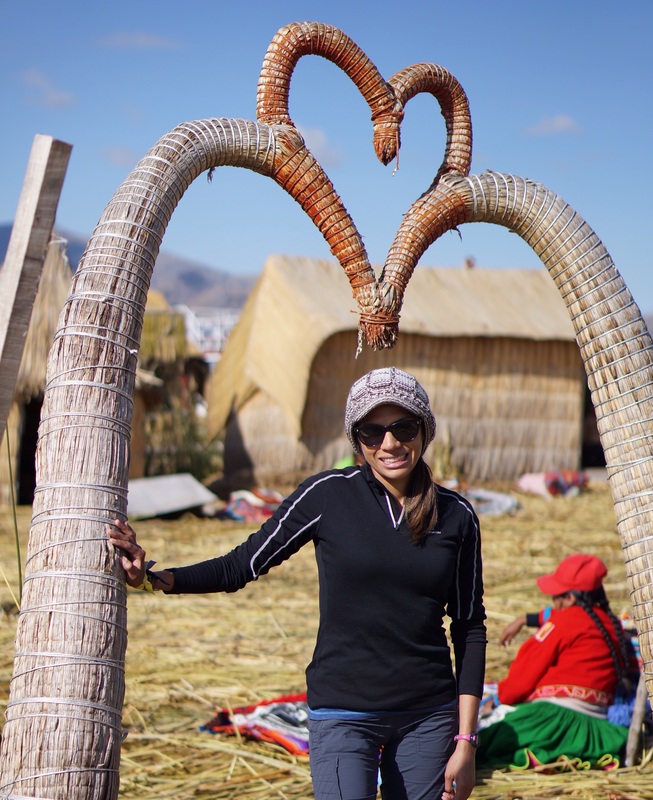
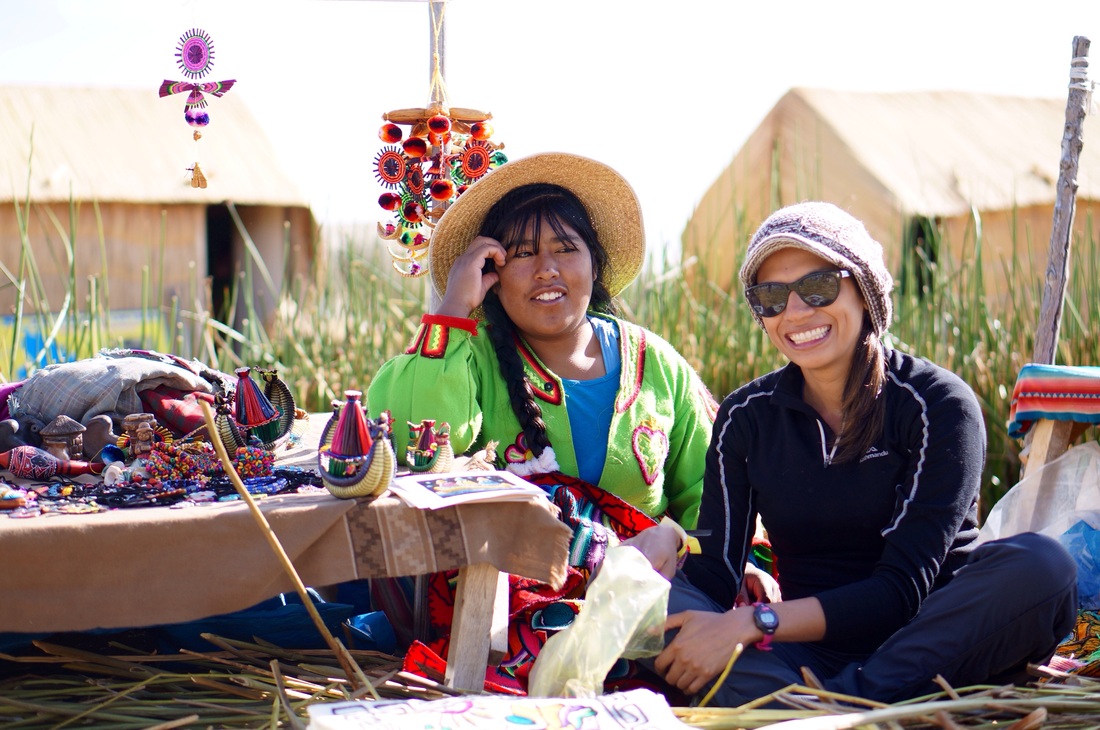
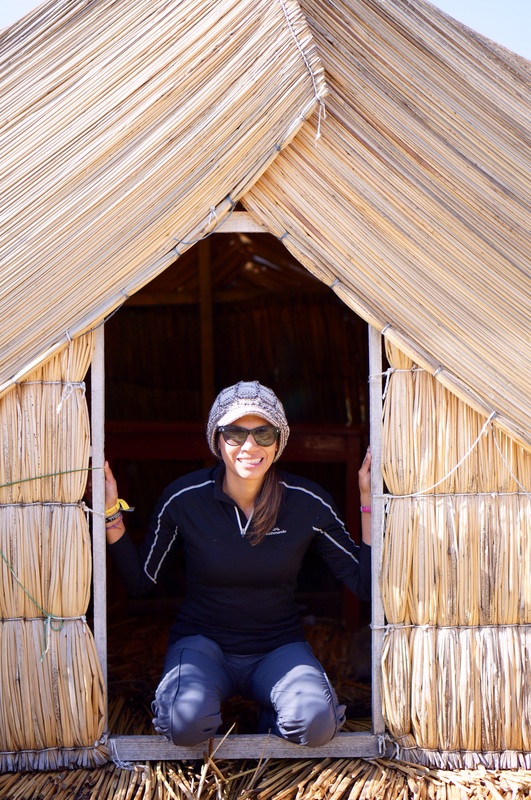
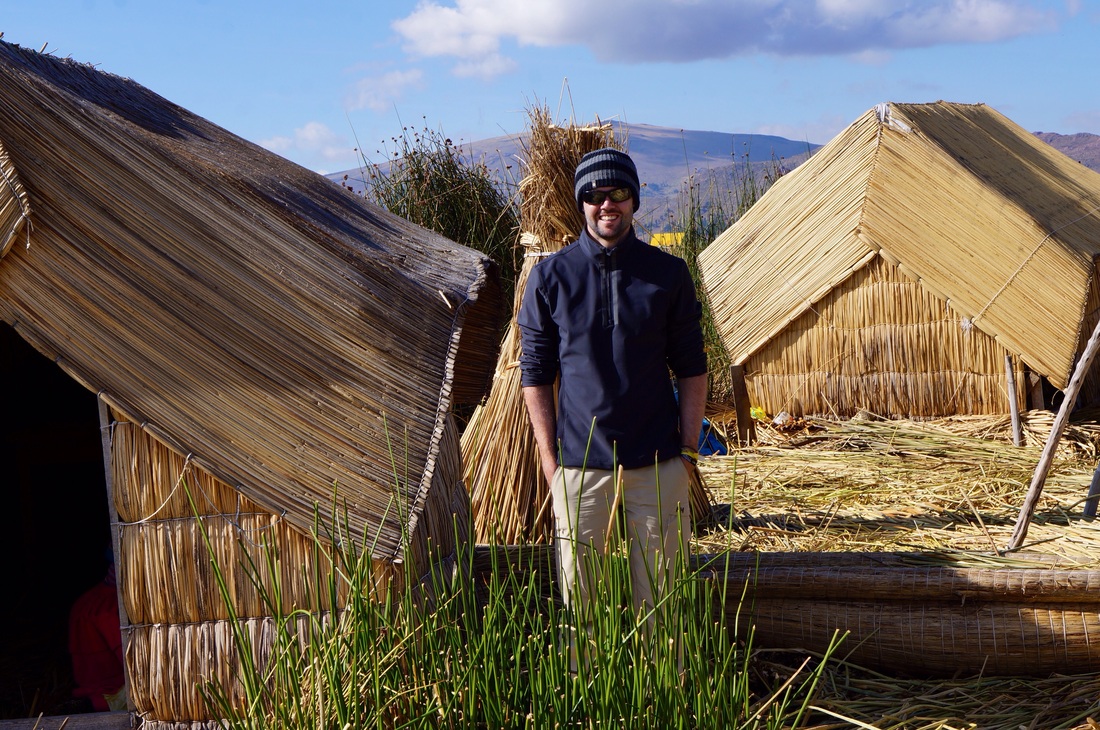
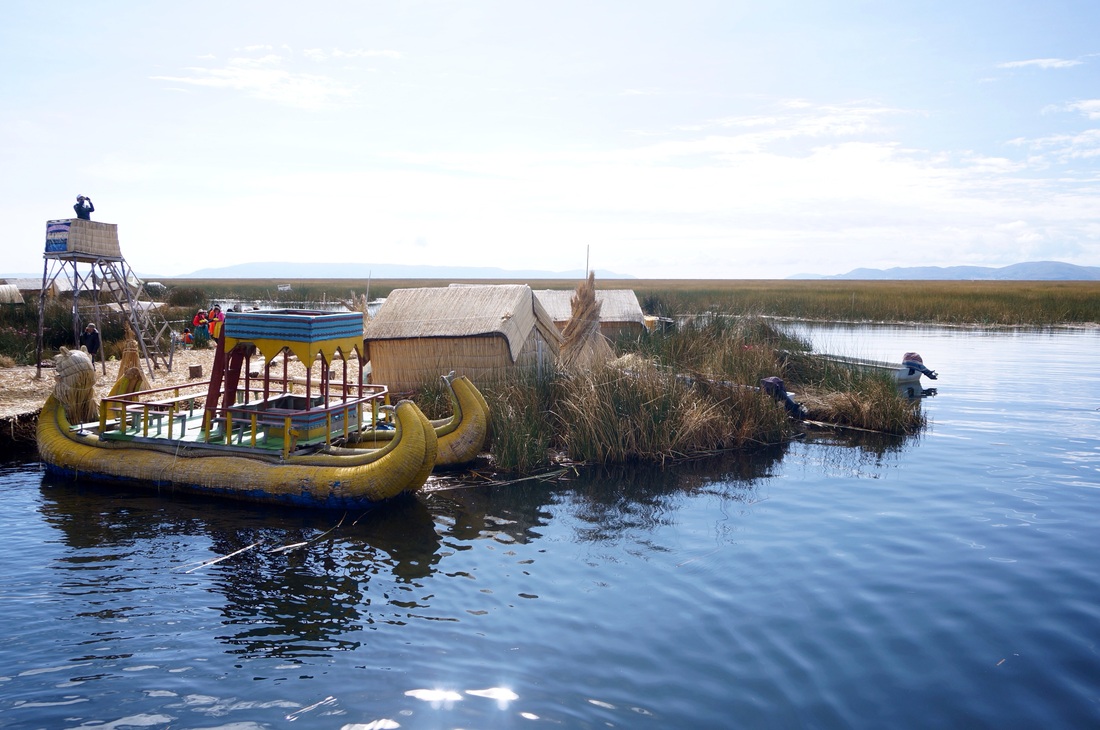
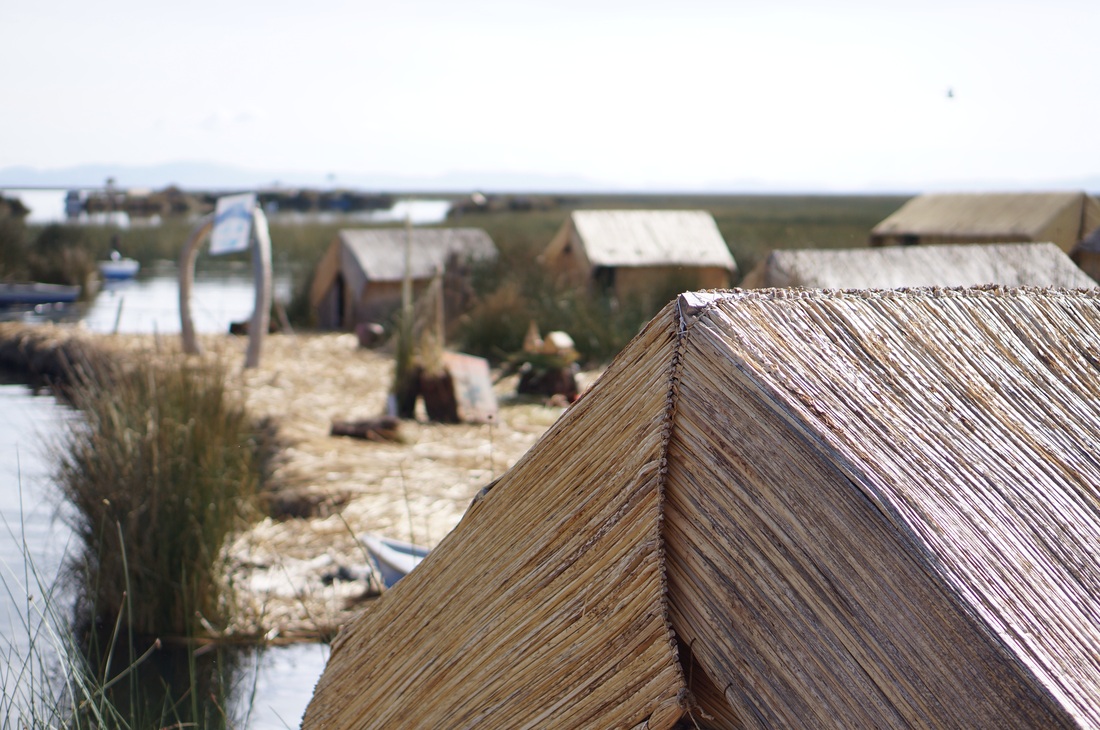
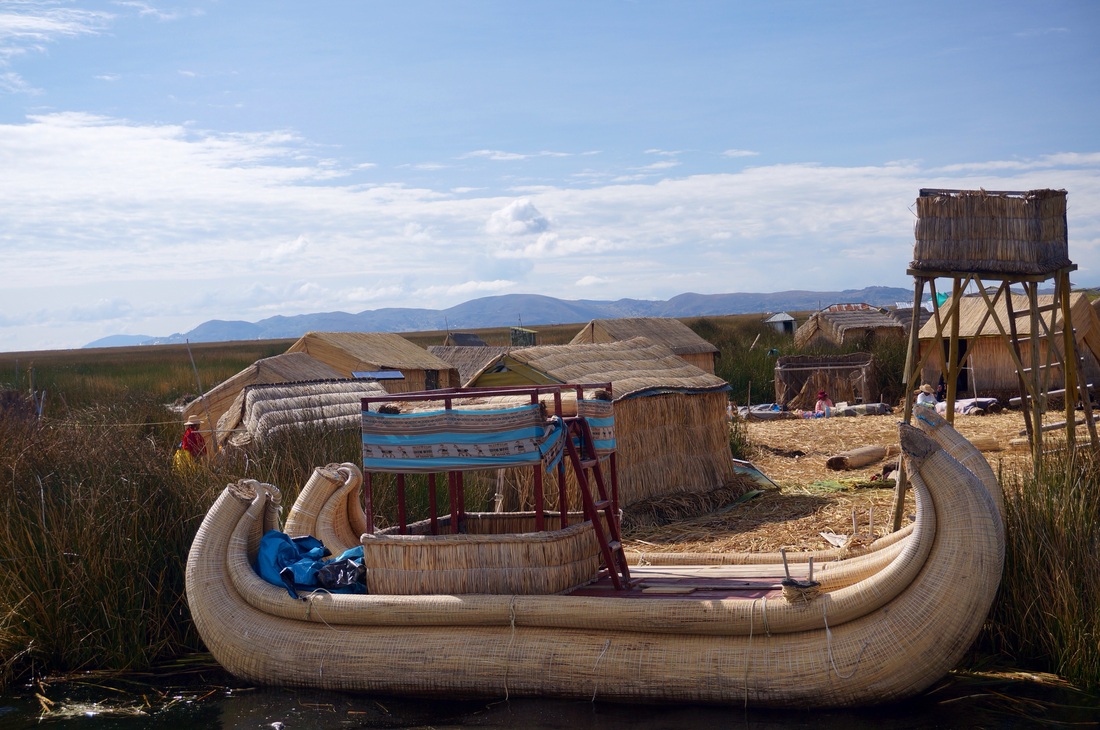
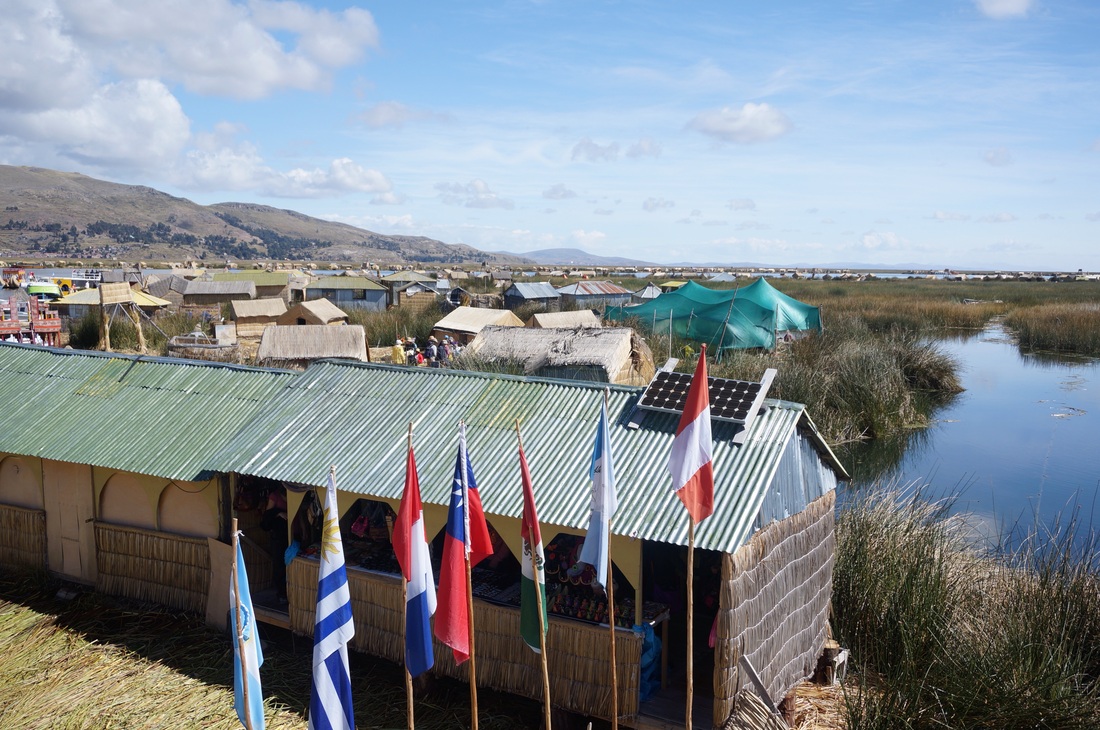
A short boat trip from Puno took us to the unique Uros islands. These floating islands (there are around 50 in total) are built using layers of buoyant reeds that are regularly replenished throughout each island's 20-year life span. The Uros people first moved on to Lake Titicaca hundreds of years ago to get away from Incan and other aggressors and have been living on the reed islands ever since. Although Uros culture certainly has been impacted by tourism, they still have many unique customs, such as electing a president for each island. The highlights of our visit were walking on the uneven surface (which took some getting used to), seeing a demonstration on how they build the islands, and riding a reed boat between islands.
Picture
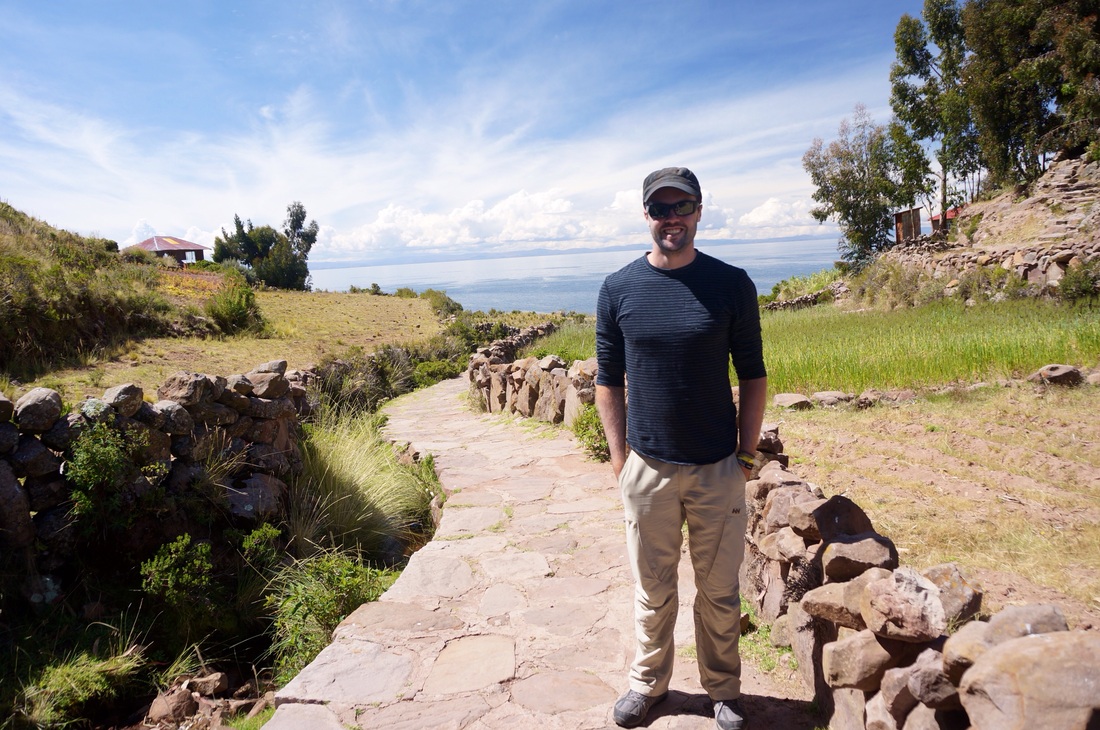
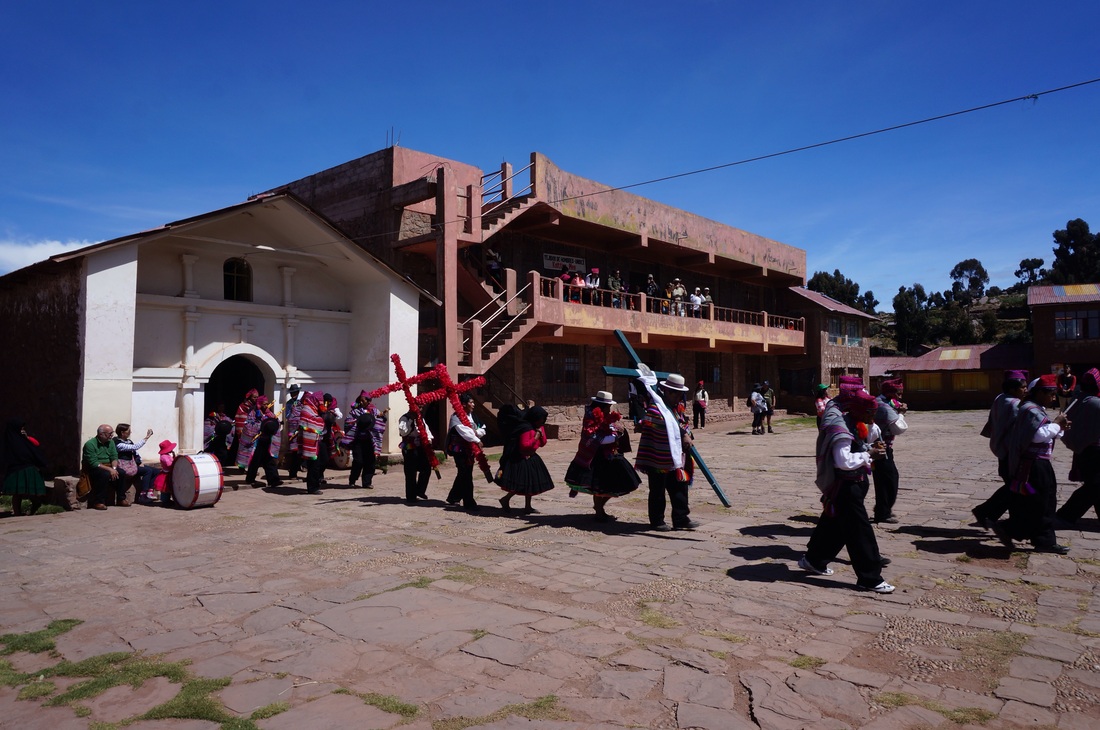
We also took a much longer boat trip to the island of Taquile, a more traditional island (excepting that it's almost four kilometers above sea level), with soil, rocks and a reasonably challenging ascent to its main village. One of the first things you notice on Taquile is that all of the locals are wearing elaborate headwear featuring differing shapes and pom poms pointed in different directions. At lunch we were told that the position and type of the headwear is used in much the same way as a gringo's Facebook relationship status to indicate whether the wearer is single, dating, married or 'it's complicated'. The advantage of Taquile being close to the centre of Lake Titicaca is that you get a true appreciation of how big the lake is. At times it was easy to imagine that we were looking at the Mediterranean sea rather than an inland high altitude lake.
Picture
Next stop was the Bolivian border, where Sam got a free pass into the country while Cindy paid $135 for a visa. Bolivians will tell you that their former president fled to the US with half the country's money, so perhaps they're slowly trying to claw it back from American tourists.

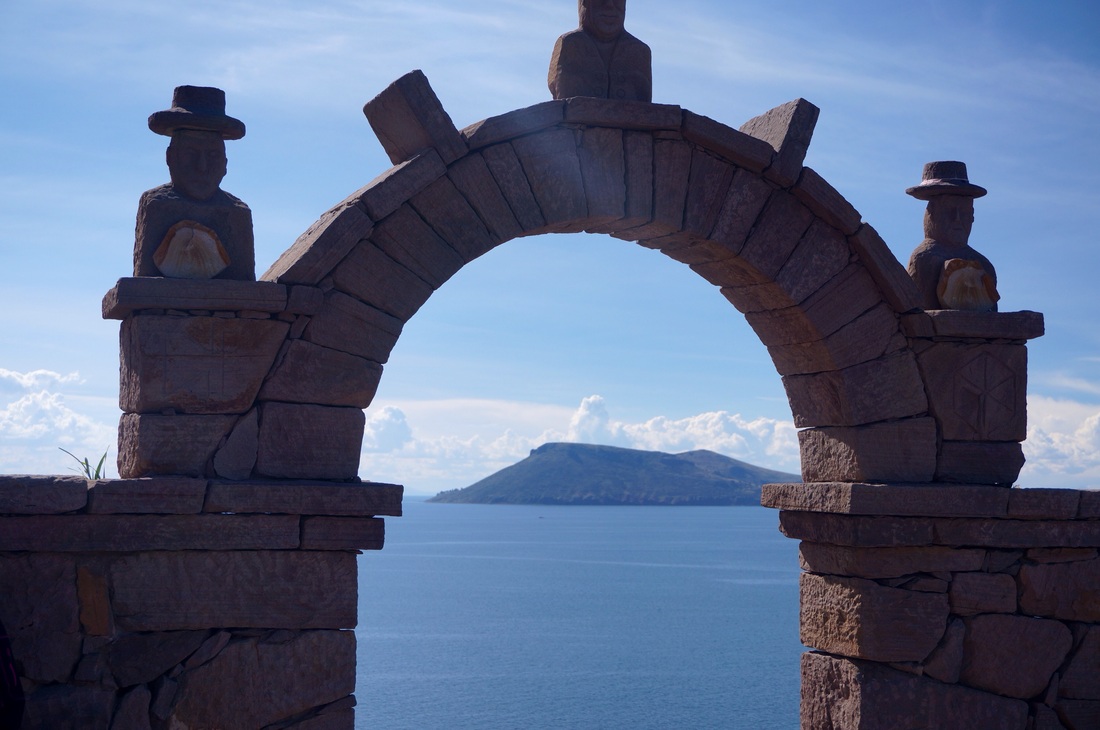
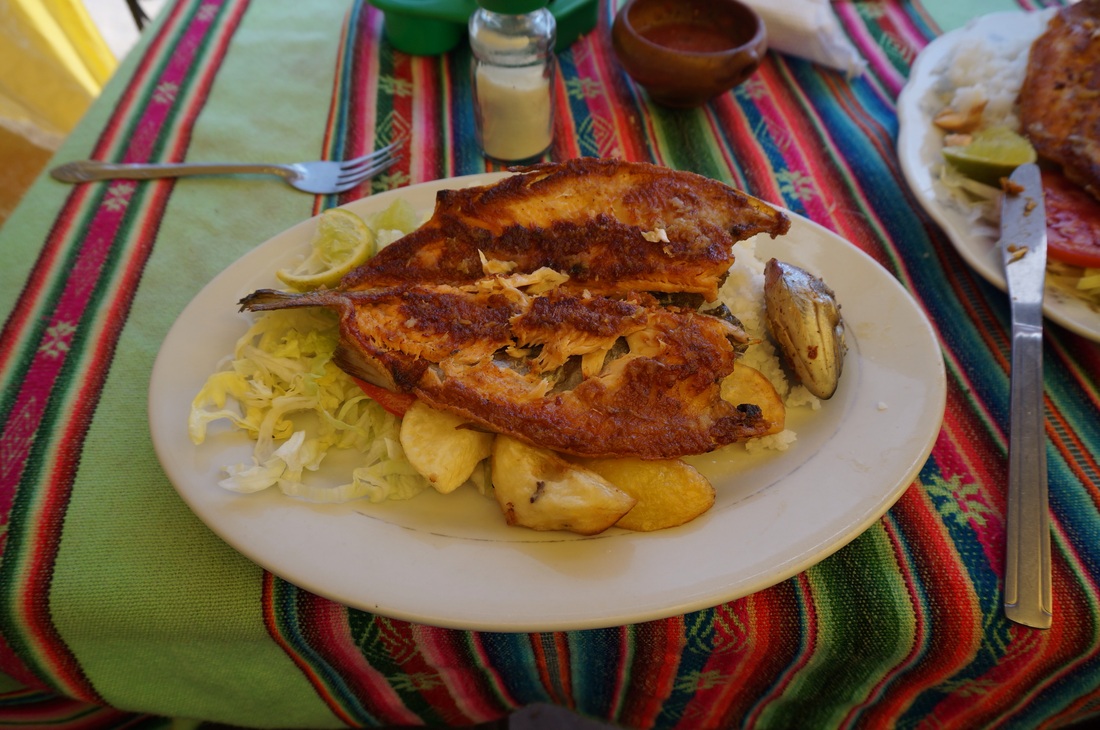
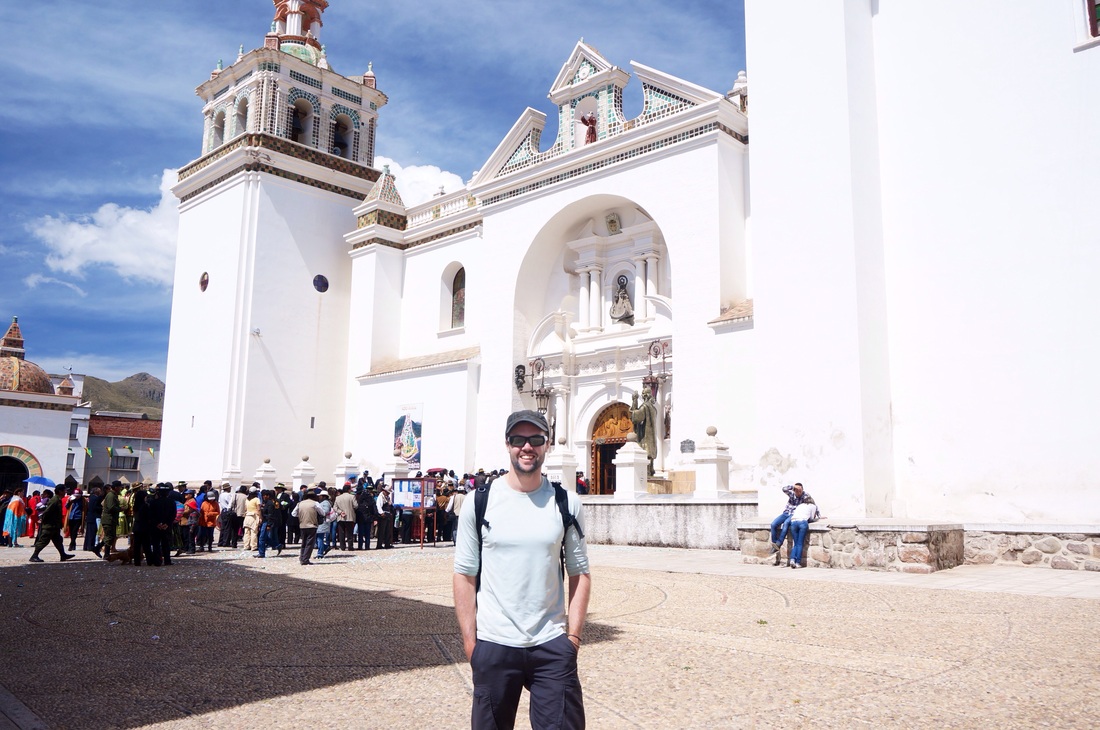
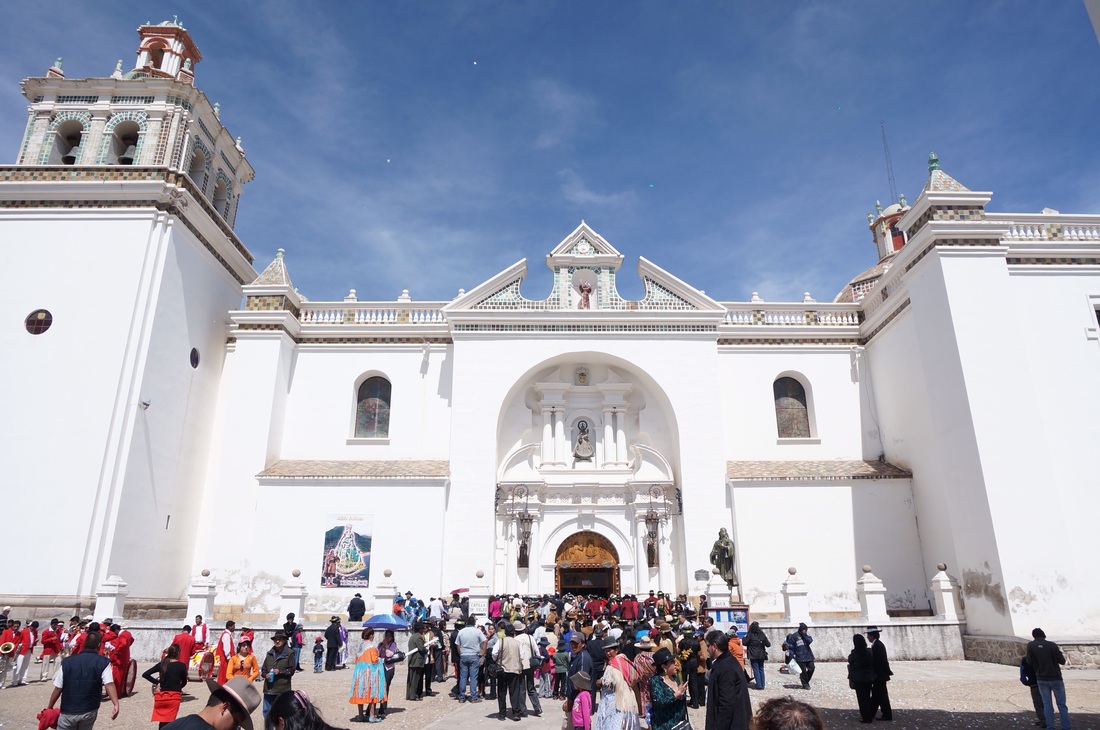
Just past the border was the small lakeside town of Copacabana, which inspired the naming of the much more famous (and we expect more picturesque) beach in Brazil. In Copacabana we wandered through the streets, visited the main cathedral and enjoyed some delicious local trout served with lake views from a street shack (which at $3 was the first of many memorable Bolivian cheap eats). 
Picture
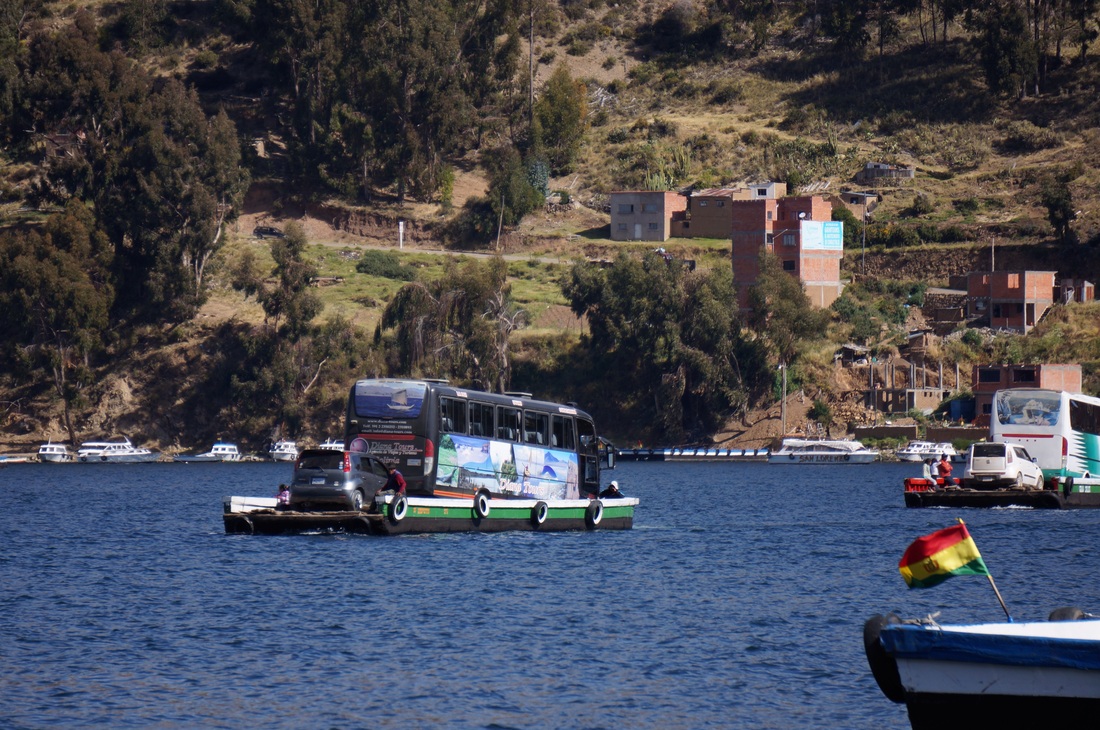
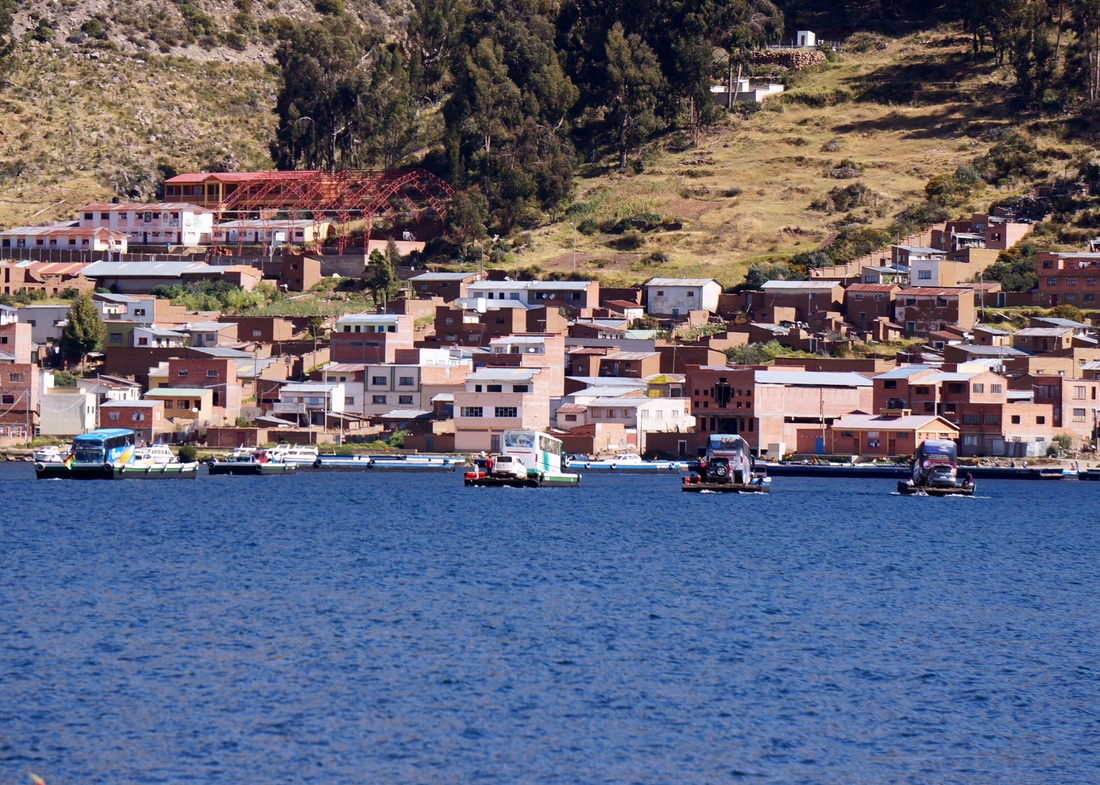
We then boarded a short, but interesting, bus trip to La Paz, featuring lake crossings (where we and our bus crossed on different vessels) and the most third world roads we'd encountered so far. There'll be more on La Paz (and interesting roads) in the next post.
Picture
1 Comment

    Where are we?

    Browse by country

    All
    Argentina
    Bolivia
    Brazil
    Cambodia
    Chile
    Colombia
    Costa Rica
    Ecuador
    El Salvador
    Guatemala
    India
    Malaysia
    Myanmar
    Nepal
    Nicaragua
    Panama
    Peru
    Sri Lanka
    Thailand
    Uruguay


Proudly powered by Weebly